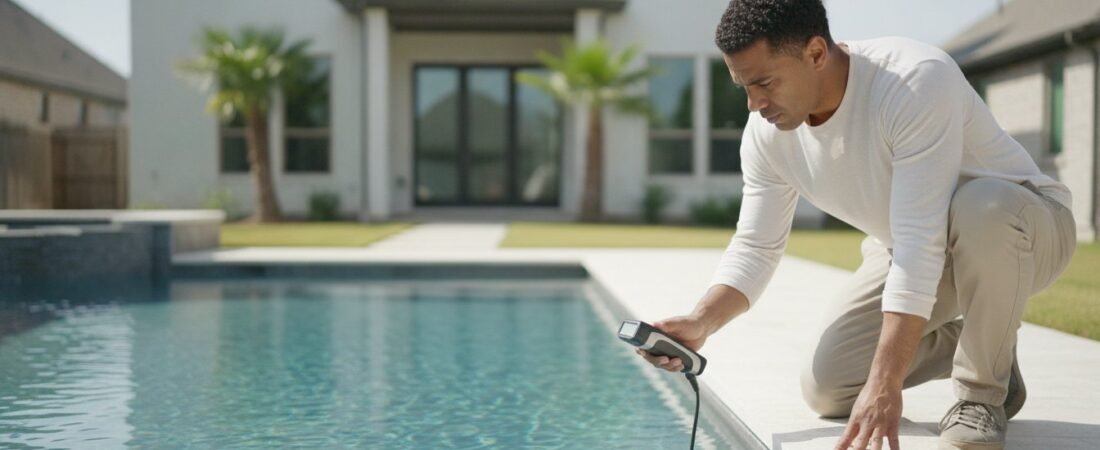
The “set it and forget it” promise of a salt water pool is often the very thing that leads to its decline. While these systems offer a softer swim, they aren’t maintenance-free. In fact, without a disciplined eye, common salt water pool problems like persistent high pH levels or white calcium flakes can quietly compromise your equipment. Automation requires more monitoring, not less. This is the salt water paradox; the convenience of chlorine generation demands a higher standard of chemical verification to prevent corrosive side effects.
You likely chose salt for the comfort and convenience. Seeing rust on your ladder or cloudy water despite the system running is frustrating. It feels like the technology is failing you. We understand that your pool is a significant investment for your home and family. This guide provides a professional roadmap to reclaim your water’s health. You’ll discover how to identify, fix, and prevent the most frequent issues using a methodical approach that prioritizes stability over quick fixes.
We will walk through the technical causes of pH drift, the mechanics of cell scaling, and a repeatable maintenance schedule. By the end, you’ll have the tools to ensure clear, balanced water and long-lasting pool equipment through every season.
Key Takeaways
- Shift your perspective from “no maintenance” to “methodical monitoring” to ensure your salt chlorine generator functions as a reliable chemical factory.
- Master the balance of pH and alkalinity to stop the formation of white calcium flakes and protect your pool’s surfaces.
- Implement a protective strategy against galvanic corrosion to save your ladders, lights, and heaters from premature metal damage.
- Establish a consistent testing routine that addresses common salt water pool problems before they lead to expensive equipment repairs.
- Learn to identify when technical warning lights require the precision of a professional diagnostic rather than a simple DIY fix.
The Salt Water Paradox: Why Low Maintenance Isn’t No Maintenance
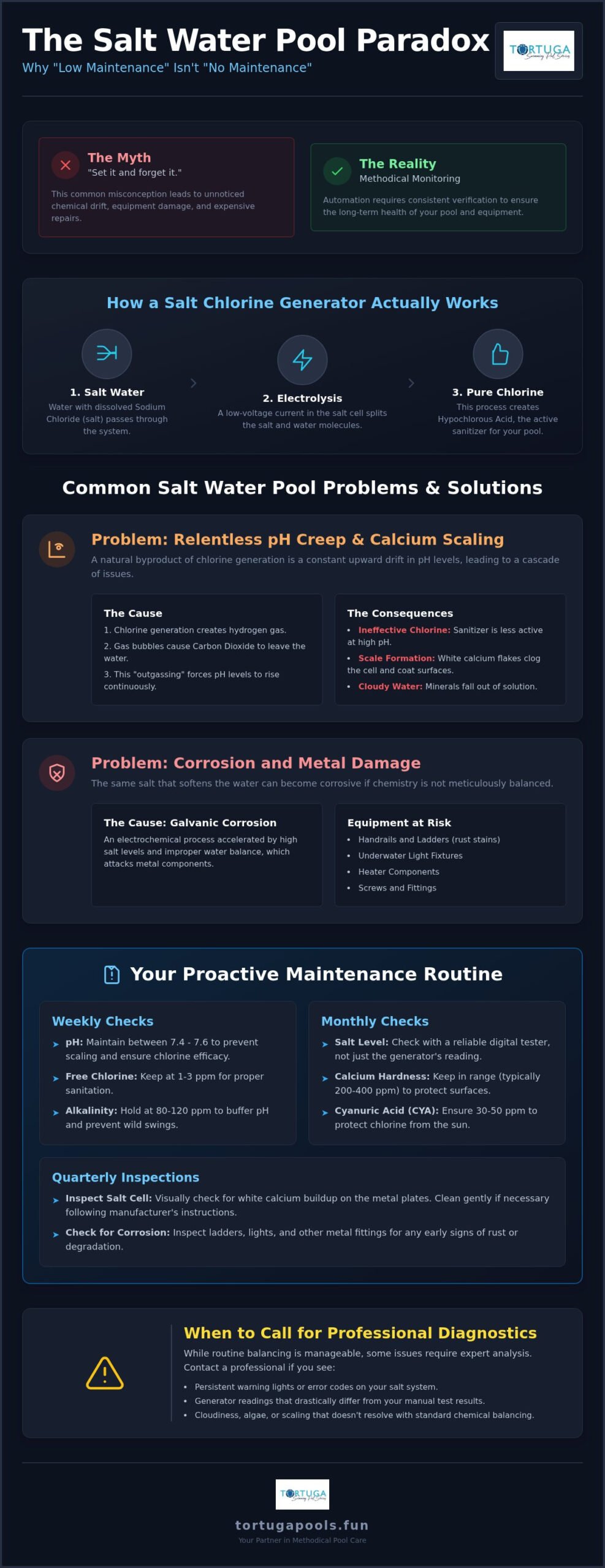
Owning a salt water pool is often framed as a hands-off experience. This misconception is the primary driver behind most common salt water pool problems. While the system automates chlorine production, it doesn’t automate the health of your water or the integrity of your equipment. Think of your salt chlorine generator (SCG) as a miniature chemical factory. It operates in your backyard, day and night, producing powerful sanitizers. If that factory isn’t monitored with precision, it will eventually damage its own infrastructure.
The “set it and forget it” mentality is a myth that leads to premature equipment failure. Professional verification is essential because automated systems can drift. A sensor might fail. A salt cell might scale over. Without a methodical approach to testing and verification, these small issues become expensive repairs. Protecting your property investment requires a steady hand and a commitment to accuracy. Consistency is the only way to ensure your pool remains a safe, relaxing environment for your family.
How Salt Chlorine Generators Actually Work
The heart of the system is the salt cell. As water passes through the cell, it undergoes the Salt water chlorination process. This reaction uses electricity to split sodium chloride into its component parts. This process creates hypochlorous acid, which is the active sanitizer that keeps your pool safe. It also produces hydrogen gas as a byproduct. In 2026, electrolysis in a pool context is defined as the electrochemical conversion of dissolved sodium chloride into sanitizing hypochlorous acid via a low-voltage electrical current. This isn’t magic; it’s chemistry that requires constant balance to function correctly.
Common Misconceptions About Salt Water Pools
One of the most persistent myths is that salt water pools are chlorine-free. This is false. They are simply chlorine pools that manufacture their own sanitizer rather than relying on manual additions. The water feels “softer” on the skin because of the dissolved salt, which acts as a natural water softener. However, this comfort can mask underlying issues. If you ignore your chemistry, the same salt that makes the water feel pleasant will begin to corrode your equipment. High salt levels and imbalanced pH are common salt water pool problems that lead to rusted ladders and degraded light niches. Longevity is earned through disciplined care, not through automation alone.
Managing pH Drift and Calcium Scaling
One of the most persistent common salt water pool problems is the relentless upward climb of pH levels. This isn’t a malfunction of the equipment. It’s a byproduct of how the system operates. When the salt cell generates chlorine, it also creates hydrogen gas. These tiny bubbles cause constant aeration as they enter the pool. This turbulence leads to carbon dioxide outgassing, which naturally pulls the pH higher. Without a disciplined approach to balancing, this “pH creep” will eventually cause your water to become aggressive and scale-forming.
The Chemistry of pH Creep
High pH isn’t just a number on a test strip. It directly impacts the efficiency of your sanitizer. When pH exceeds 7.8, your chlorine becomes significantly less active and takes longer to kill bacteria. This imbalance also creates an environment where minerals can no longer stay dissolved in the water. Homeowners in Katy should watch for the Signs of Unbalanced Pool Water: Katy Homeowner Guide to catch these shifts before they cause permanent damage to the pool’s finish.
Preventing and Removing Calcium Scale
The combination of high pH and calcium hardness leads to scaling. This often manifests as “white flakes” returning through the jets. These flakes are actually bits of calcium carbonate that have broken off from the salt cell plates. Scaling inside the cell is one of the most common problems with salt systems. It acts as an insulator on the plates, forcing the cell to work harder and shortening its lifespan. If left unchecked, you’ll see permanent calcium deposits on your pool’s plaster or tile line that are difficult to remove.
To prevent this, we use the Langelier Saturation Index (LSI). It’s a mathematical formula that tells us if your water is balanced, scale-forming, or corrosive. Understanding what muriatic acid does for pools is critical for salt pool pH control, as it’s the primary tool for offsetting natural pH drift. If scaling has already occurred, follow these methodical steps to clean your cell:
- Turn off the pool pump and the salt chlorine generator.
- Remove the cell and inspect the internal plates for white, crusty buildup.
- Use a diluted solution of four parts water to one part muriatic acid.
- Soak the cell only until the fizzing stops; avoid over-soaking to protect the plate coating.
- Rinse the cell thoroughly with fresh water before reinstalling.
Consistency is key to protecting your equipment. If you want professional verification of your LSI and water balance, our team provides weekly cleaning and maintenance to keep your chemistry in a protective state. This methodical care ensures your salt cell lasts its full expected term and your pool surfaces remain pristine.
Corrosion and Metal Damage: Protecting Your Equipment
Salt water is a natural electrolyte. This means it conducts electricity much more efficiently than fresh water. In a pool environment, this conductivity accelerates a process known as galvanic corrosion. When different metals, such as a stainless steel ladder and a copper heater coil, are submerged in an electrolyte, they create a weak electrical circuit. The “weaker” metal will begin to lose molecules to the “stronger” metal. This electrochemical reaction is one of the most destructive common salt water pool problems because it happens out of sight, often inside your expensive machinery.
Your pool heater is particularly vulnerable. Most heaters utilize copper heat exchangers because copper is an excellent conductor of heat. However, copper is also highly susceptible to erosion in high-salinity environments. If your chemistry is imbalanced, the salt water will literally strip the copper from the coils. This leads to pinhole leaks and green staining on your pool surface. Additionally, high salt levels can degrade the internal seals of your circulation system. This often results in the signs of a failing pool pump, such as visible salt crusting around the pump shaft or a humming motor that refuses to turn.
The Role of Sacrificial Anodes
A sacrificial anode is a critical line of defense for any salt water pool. Usually made of zinc, this component is installed into your plumbing or bolted to your ladder. Zinc is a “softer” metal than copper or stainless steel. Because it’s more reactive, the galvanic corrosion attacks the zinc instead of your heater or lights. The zinc literally sacrifices itself to protect your property. A methodical inspection of the anode should be part of your quarterly routine. If the zinc appears pitted, gray, or has dissolved to half its original size, it’s time for a replacement. Ignoring a depleted anode leaves your entire equipment pad unprotected.
Managing Metal Sequestrants
The salt you add to your pool is rarely 100% pure sodium chloride. It often contains trace amounts of minerals and metals like iron or manganese. Over time, these metals accumulate in the water. When they reach a certain concentration, they can drop out of suspension and leave stubborn, dark stains on your plaster. Using a metal sequestering agent is a necessary step in a disciplined maintenance schedule. These chemicals “wrap” around metal ions, keeping them in a liquid state so they can be filtered out. For homeowners dealing with existing equipment damage or staining, seeking Professional Pool Repair Near Me is the most reliable way to diagnose the extent of the corrosion and restore the system’s integrity.
A Methodical Maintenance Routine for Salt Water Success
Success with a salt system is a matter of discipline. Many homeowners fall into the trap of reacting to issues only after they appear. A methodical maintenance routine prevents common salt water pool problems by identifying chemical drifts before they reach a critical state. We advocate for a “Steady Hand” approach. This means making small, frequent adjustments rather than shocking the system with large chemical doses. This consistency protects the water’s balance and extends the life of your equipment pad.
Cyanuric Acid (CYA) acts as sunscreen for your chlorine. Because a salt cell produces chlorine slowly throughout the day, that chlorine is highly vulnerable to UV degradation. In the intense Texas sun, maintaining a CYA level between 60 and 80 ppm is standard for salt systems. If your stabilizer is too low, your cell will run at 100% output just to keep up. This overworks the plates and leads to premature cell failure. Balancing CYA is a protective measure for both your water and your wallet.
Weekly and Monthly Testing Checklists
Your testing schedule should be rigid. Every week, you must verify your pH and Free Chlorine levels. This ensures the cell is actually producing sanitizer and that the natural pH drift is being managed effectively. On a monthly basis, a deeper dive is required to check Salt, Calcium Hardness, and Cyanuric Acid. Because high alkalinity often accompanies salt pools, knowing how to lower alkalinity in pool is a fundamental skill for stabilizing your water’s chemistry and preventing scale.
Salt Level Management in Katy, TX
The Houston climate presents unique challenges for salinity. Heavy spring rains can quickly dilute your salt concentration, triggering “Low Salt” alarms. Conversely, high summer evaporation rates remove water but leave the salt behind. This causes concentrations to spike. Over-salting can lead to corrosive water that damages internal pump seals. Never rely solely on the digital reading on your control panel. These sensors can become fouled by calcium or simply fall out of calibration. A manual drop test is the only way to verify your actual salinity with professional accuracy.
Maintaining this level of precision requires time and technical knowledge. If you prefer the security of a professional eye to manage these variables, our weekly cleaning and maintenance service provides the methodical care your property deserves. We handle the verification so you can focus on enjoying the water.
Professional Care: When to Call Tortuga Pools
DIY maintenance has its place for simple tasks. However, the technical complexity of salt chlorine generators often exceeds the capabilities of standard home testing kits. When you encounter persistent common salt water pool problems, guessing at the solution can lead to wasted chemical spend and equipment damage. A methodical professional diagnostic identifies the root cause of an issue rather than just treating the symptoms. This transition from guesswork to verification is the foundation of long-term pool health.
Specialized Salt System Diagnostics
Control panels often display cryptic warnings like ‘Check Cell’ or ‘No Flow.’ These lights don’t always indicate a total hardware failure. A ‘No Flow’ light could stem from a dirty filter, a closed valve, or a fouled flow switch. We approach these alerts with a disciplined checklist. We test the cell’s conductivity and the power center’s output to ensure electricity is actually reaching the plates. This technical accuracy prevents the unnecessary replacement of a salt cell that may simply need a professional cleaning or a sensor calibration.
If your system has been offline for an extended period, you might face a rapid algae bloom. A salt chlorine generator is designed to maintain sanitizer levels, not to eradicate a massive infestation. Our green pool algae cleanup Katy service utilizes a heavy-hitting recovery process to reset your water’s chemistry. Once the water is clear and the phosphates are removed, we transition the pool back to its salt-generated environment safely and effectively.
The Tortuga Pools Commitment
Choosing a local service provider means choosing neighborly accountability. We treat your property with the same diligence we apply to our own. Our weekly pool maintenance Katy TX program is built on meticulous verification of every chemical parameter. We don’t rush the process. We take the time to ensure your LSI is balanced and your equipment is protected from the corrosive risks discussed in previous sections.
A steady hand is the best defense against the “salt water paradox.” By combining technical expertise with a repeatable maintenance schedule, we ensure your pool remains a source of relaxation rather than a list of chores. Schedule your professional salt water pool assessment with Tortuga Pools today. and let us provide the professional reassurance your family deserves.
Securing Your Pool’s Future with Methodical Care
Protecting your salt water pool requires a shift from passive ownership to disciplined stewardship. We have explored how the salt water paradox demands consistent monitoring to prevent common salt water pool problems from compromising your equipment. By managing pH drift with precision and utilizing sacrificial anodes to combat galvanic corrosion, you ensure your pool remains a stable, long-term asset for your home. Automation is a tool for convenience; it is never a replacement for professional verification.
As a family-owned business specializing in Katy and Fulshear salt systems, Tortuga Pools provides the steady hand needed to navigate these technical challenges. Our expertise in professional leak detection and equipment repair allows us to diagnose issues with accuracy and neighborly accountability. We prioritize the health of your water and the longevity of your components through a repeatable, high-standard maintenance schedule. You don’t have to manage the chemistry alone.
Request a Methodical Salt Water Maintenance Quote today to experience the peace of mind that comes from professional reassurance. Let us help you maintain a clear, balanced, and enduring backyard retreat for your family.
Frequently Asked Questions
Why is my salt water pool turning green if the generator is on?
A green pool usually indicates that your chlorine demand is higher than the system’s current output. Even if the generator is on, a fouled sensor, low salt levels, or cold water temperatures can prevent it from producing enough sanitizer. In the Katy area, heavy rain can also introduce organic matter that consumes chlorine faster than the cell can replace it. Professional chemical balancing is required to reset the water and eliminate the algae.
How often should I clean my salt chlorine generator cell?
You should inspect your salt cell for scale every three months. Cleaning is only necessary if you see white, crusty calcium deposits on the internal plates. Over-cleaning with acid can strip the precious metal coating from the plates, which shortens the cell’s lifespan. We recommend a methodical inspection schedule to ensure your equipment remains efficient without causing unnecessary wear through over-maintenance. Consistency is the key to protecting your investment.
Why do I have white flakes floating in my salt water pool?
White flakes are calcium carbonate deposits that have flaked off the salt cell plates. This is one of the common salt water pool problems caused by high pH and high calcium hardness. When the water inside the cell becomes too alkaline, scale forms rapidly and then gets pushed into the pool through the return jets. Balancing your Langelier Saturation Index (LSI) will stop this process and protect your pool’s surfaces from further buildup.
Is it normal for the pH to always be high in a salt pool?
High pH is a natural byproduct of the salt chlorination process. As the cell generates chlorine, it also produces hydrogen gas bubbles that aerate the water. This aeration causes carbon dioxide to outgas, which steadily raises the pH level. Homeowners in Houston must expect to add muriatic acid regularly to counteract this drift. Without this disciplined intervention, the high pH will lead to scaling and reduced chlorine effectiveness over time.
Can I use regular pool shock in a salt water pool?
You can and should use regular pool shock when the situation demands it. Salt generators are designed to maintain chlorine levels, not to provide a rapid “knockout” punch for algae or heavy bather loads. Liquid chlorine is the preferred choice as it doesn’t add extra calcium or stabilizer to the water. Using shock after a heavy Texas thunderstorm helps your salt system keep up with the increased sanitizer demand without overworking the cell.
How long do salt water pool cells typically last before replacement?
Most salt cells last between three and seven years. Their lifespan depends heavily on how many hours they run and how well you maintain your water chemistry. In 2026, industry data shows that replacement cells typically cost between $300 and $1,000, though total installed costs can reach up to $2,100. Methodical maintenance and keeping your cell clean from scale are the most effective ways to reach the upper end of that seven-year estimate.
Does a salt water pool need stabilizer (Cyanuric Acid)?
Stabilizer is essential for salt pools to protect the chlorine from UV degradation. Because the generator produces chlorine slowly, the sun can burn it off as fast as it is made if Cyanuric Acid levels are too low. In the intense Katy sun, we recommend maintaining levels between 60 and 80 ppm. This acts as a shield, allowing your salt system to work efficiently without running at 100% capacity and wearing out early.
Will salt water damage my pool’s stone coping or deck?
Salt water can damage porous stone surfaces like flagstone or travertine through a process called salt spalling. When salt water soaks into the stone and evaporates, the salt crystals grow and put internal pressure on the material, causing it to flake or crumble. To prevent this, we recommend sealing your coping and deck every one to two years. Rinsing the deck with fresh water after use also helps mitigate this risk for Houston homeowners.