A Saturday morning in Katy often begins with the familiar hum of a pool pump, but when that sound is replaced by a grinding screech or total silence, the anxiety sets in. You know that without circulation, the Texas heat will turn your clear water green in a matter of hours. Understanding the early signs of a failing pool pump is your first line of defense against these frustrations. It allows you to address minor mechanical issues before they escalate into a total system failure or a costly equipment replacement.
We believe in a steady, methodical approach to home maintenance. You deserve a clear way to distinguish between a simple plumbing leak and a terminal motor issue. This guide provides a disciplined checklist of symptoms to monitor. We cover everything from air bubbles in the pump basket to decreased water flow at the returns. We will show you how to verify the health of your equipment with precision and patience. By the end, you will have the confidence to decide whether a repair is sufficient or if it is time to call a professional for a more permanent solution.
Key Takeaways
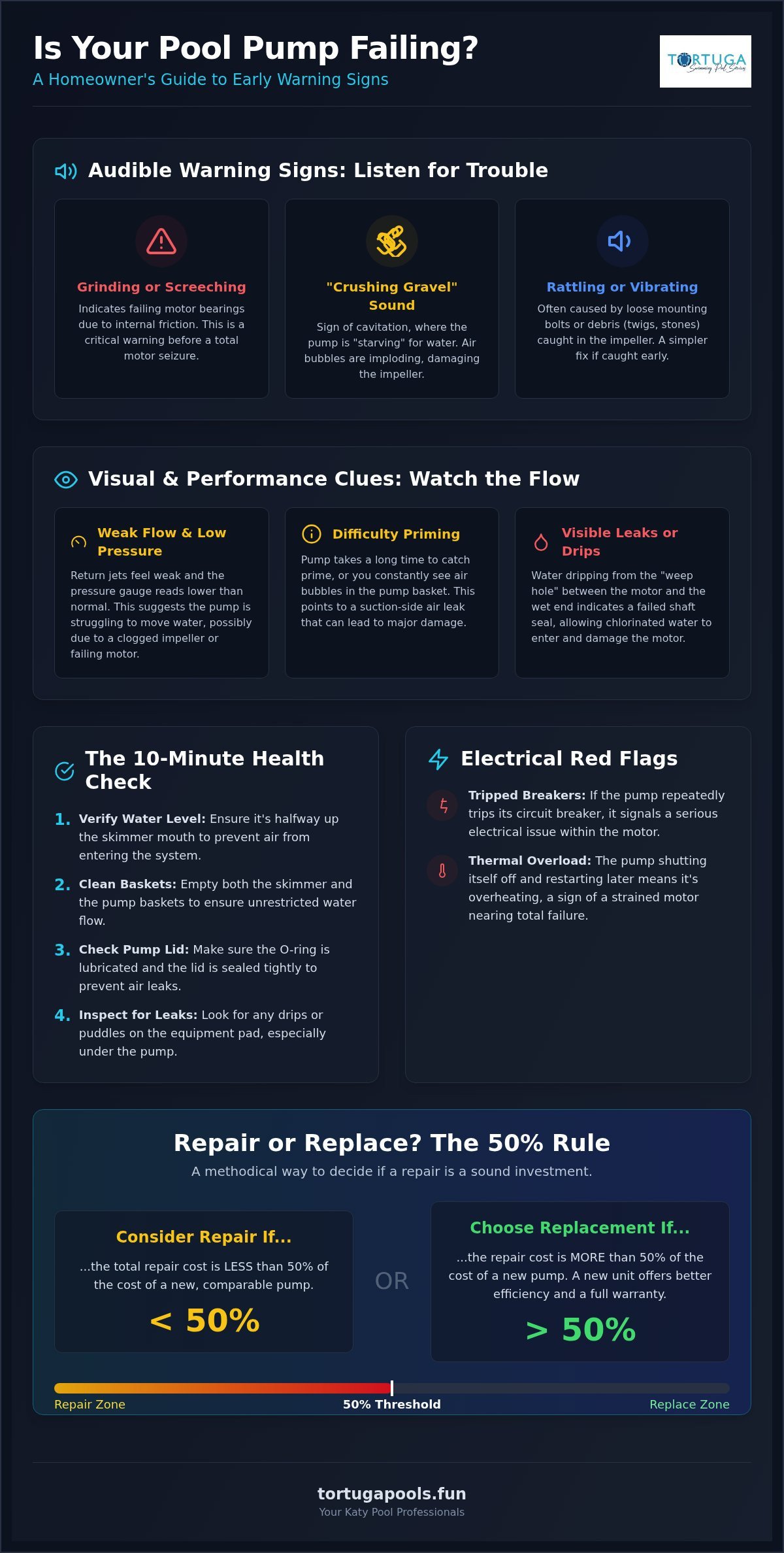
- Listen for specific sounds like grinding or screeching that indicate worn motor bearings before the system seizes.
- Learn to recognize visual signs of a failing pool pump, such as weak return flow and recurring difficulty pulling water.
- Understand electrical red flags like tripped breakers and thermal overload shutdowns that protect your equipment from total failure.
- Follow a methodical 10-minute health check to verify water levels and basket cleanliness before calling for service.
- Use the “50% Rule” to determine if a repair is a sound investment or if a new equipment installation is more logical.
Listen for the Warning: Identifying Unusual Pool Pump Noises
Your pool equipment pad should have a predictable soundscape. A healthy pump operates with a consistent, low-frequency hum. This sound indicates that the internal components are balanced and the motor is drawing power efficiently. When this rhythm breaks, it is often one of the first audible signs of a failing pool pump. Listening carefully can save you from a total system shutdown during a humid Katy July. Identifying these sounds early allows for a disciplined repair rather than an emergency replacement.
Bearing Failure: The Grinding Sound of No Return
Bearings are small metal components that allow the motor shaft to spin with minimal friction. They are housed in a sealed environment, but heat and moisture eventually take their toll. If the internal shaft seal fails, chlorinated water can seep into the motor and strip away essential lubrication. This results in a high-pitched screeching or a heavy grinding noise. Ignoring this sound is a mistake. It indicates that the motor is working against intense internal friction. Eventually, the resulting heat can weld the components together. This leads to a total motor seizure and a much higher repair bill.
Cavitation: When Your Pump is Starving for Water
If your pump sounds like it is crushing gravel, you are likely hearing cavitation. This occurs when the pump is “starving” for water. To understand the mechanics of this issue, it helps to look at How Pool Pumps Work; these devices rely on a constant volume of water to maintain pressure. When air enters the system, bubbles form and implode with violent force against the impeller. In our local climate, this is frequently caused by water levels dropping below the skimmer mouth due to evaporation or a stuck weir door. Long-term cavitation erodes the impeller and can eventually warp the pump housing itself.
Sometimes the noise is less about internal failure and more about stability. A rattling sound often points to loose mounting bolts or a pump base that has shifted on the concrete pad. If the vibration is localized within the pump basket area, a piece of debris may have bypassed the basket and lodged in the impeller. A steady hand and a methodical inspection can often resolve these issues before they cause permanent damage. We recommend checking the following if you hear rattling:
- Mounting Bolts: Ensure the pump is secured tightly to its base.
- Impeller Debris: Clear any small stones or twigs that may have reached the internal vanes.
- Plumbing Tension: Check if PVC pipes are vibrating against other equipment.
Watch the Flow: Visual and Performance Indicators of Failure
Visual cues provide a clear window into the mechanical health of your system. While sound tells part of the story, the actual movement of water confirms whether your equipment is performing its primary job. Monitoring the return jets is a simple way to gauge performance. If the flow feels significantly weaker than usual, it is often one of the early signs of a failing pool pump. This lack of circulation allows heat and bacteria to take hold, which is why a methodical visual inspection is essential for every Katy homeowner.
Analyzing Low Water Flow and Pressure
A drop in water pressure requires a disciplined diagnostic approach to separate filter issues from pump failure. Check your pressure gauge first. If the PSI is higher than your clean-filter baseline, the issue is likely a dirty filter. However, if the PSI is lower than normal and the return flow is weak, the pump is likely struggling to pull or push water. This often indicates a clogged impeller or a failing motor that can no longer maintain the necessary RPMs. Upgrading to energy-efficient pool pumps is often the most logical step when these performance issues persist, as modern variable-speed models provide much more consistent flow control.
Difficulty priming is another performance red flag. Your pump should be able to pull water and purge air within a few minutes of startup. If you see constant bubbles swirling in the pump basket or if the water level inside the housing never reaches the top, you have a suction-side air leak. These leaks are often found at the pump lid O-ring or the intake plumbing unions. Left unaddressed, this constant presence of air leads to the cavitation issues mentioned previously, eventually melting the internal seals.
Identifying Pump Housing and Seal Leaks
Moisture around the equipment pad is never normal. You should specifically check the “weep hole” located on the underside of the pump where the motor meets the wet end. If you see dripping or white calcium crusting in this area, the internal shaft seal has failed. This is a critical moment. If water continues to leak, it will eventually travel down the motor shaft and destroy the front bearing. In our local environment, salt water or heavy chemical concentrations accelerate this corrosion, turning a simple seal replacement into a total motor failure. Understanding common pool chemical mistakes is essential here, as improper water chemistry is one of the leading causes of accelerated seal and bearing corrosion in Katy pools.
Small puddles on the concrete pad may also indicate a hairline crack in the pump housing itself. Because these cracks expand under pressure, they can be difficult to spot when the system is off. If you are struggling to find the source of the water, a professional leak detection service can provide the precision needed to identify the fault. Protecting your investment requires catching these leaks early. If your system is showing these symptoms, reaching out for professional equipment repair can prevent a minor drip from becoming a major equipment expense. Sand settling on the pool floor or water trickling from the waste line may also point to a separate but related issue; in those cases, a dedicated pool sand filter repair guide for Katy homeowners can help you methodically diagnose whether your filtration system is contributing to the problem.
Electrical Red Flags: Tripped Breakers and Thermal Overload
Electrical issues often present the most frustrating signs of a failing pool pump because they can be intermittent. Unlike a constant grinding noise, an electrical fault might only appear during the hottest part of the day or after the pump has been running for several hours. These red flags are the system’s way of protecting itself from permanent damage or fire hazards. A disciplined diagnostic approach helps you determine if the issue is a simple component failure or a terminal motor short.
Thermal Overload and the Houston Heat
Katy summers are notoriously difficult on outdoor machinery. When ambient temperatures climb above 95 degrees, your pool motor must work significantly harder to dissipate its own internal heat. Most modern motors include a thermal overload switch designed to cut power if the internal temperature reaches a dangerous level. If your pump shuts off every afternoon but runs fine during the cooler night hours, the motor is likely struggling with heat dissipation. This is often caused by aging internal windings or poor ventilation around the equipment pad. Ensure your equipment is not crowded by landscaping or debris; restricted airflow accelerates the degradation of the motor’s insulation.
A simple “Hot to the Touch” test can provide immediate clarity. While a motor will always be warm during operation, it should never be so hot that you cannot briefly rest your hand on the housing. If the metal is scorching, the motor is drawing excessive amperage. This is a clear indicator that the internal components are failing and the unit is nearing the end of its functional life.
The Role of the Start Capacitor
Sometimes a pump refuses to spin but emits a loud, distinct hum followed by a sharp “click” sound. This often points to a failed start capacitor rather than a dead motor. The capacitor acts like a temporary battery. It provides the high-torque jolt needed to get the motor shaft spinning from a dead stop. In many cases, replacing this part can save you from a much more expensive motor replacement. However, diagnosing this requires precision. A motor that hums could also be physically jammed by debris or have seized bearings.
Homeowners should exercise extreme caution here. Capacitors store a high-voltage electrical charge even when the power is turned off. Handling them without professional training and the correct discharge tools is dangerous. If your pump is humming but failing to start, it is a signal to seek professional equipment repair to avoid electrical injury or further damage to the motor windings.
If your circuit breaker trips immediately when the pump turns on, do not continue to reset it. This is a serious safety warning. A tripping breaker usually indicates a direct short to ground or a motor that is pulling twice its rated amperage. Repeatedly forcing the breaker to stay on can lead to melted wiring or an electrical fire. This is the moment where the “steady hand” approach is most critical. Stop the power and verify the electrical integrity of the system before proceeding.
The 10-Minute Methodical Pool Pump Health Check
Before you assume your equipment needs a major overhaul, perform a disciplined inspection. Many performance issues that look like signs of a failing pool pump are actually caused by routine maintenance oversights. A methodical 10-minute walk-through helps you eliminate simple variables and narrow down the root cause of the problem. This process ensures you don’t spend money on a replacement when a simple cleaning would suffice.
Follow these five steps to verify your system’s integrity:
- Step 1: Clear the Baskets. Empty both the skimmer and the pump strainer baskets. Debris restricts flow and forces the motor to work harder.
- Step 2: Verify Water Level. Ensure the pool water is halfway up the skimmer mouth. Low water leads to air intake and cavitation.
- Step 3: Inspect the Pump Lid. Check the O-ring for cracks, flat spots, or debris. A poorly sealed lid is the most common source of suction-side air leaks.
- Step 4: Check the PSI. Look at your filter pressure gauge. Compare the current reading to your baseline pressure from when the filter was last cleaned. If your system uses a cartridge filter, following a proper cartridge pool filter cleaning routine for Katy TX homeowners ensures your baseline PSI readings remain accurate and reliable.
- Step 5: Listen to the Motor. Stand near the pump and listen for the grinding, screeching, or rattling sounds discussed earlier in this guide.
Ruling Out the Simple Fixes First
A heavily clogged skimmer basket mimics a failing motor by starving the pump of water. This creates the same low-pressure symptoms and weak return flow as a damaged impeller. If you suspect an air leak at the pump lid, perform the “Bucket Test.” Pour water slowly over the lid while the pump is running. If the air bubbles in the basket disappear briefly, you have found your leak. Integrating these checks into your weekly pool maintenance routine prevents minor issues from becoming mechanical failures.
When the DIY Check Reveals a Problem
If your health check confirms that the baskets are clean and the water level is correct, but the pump still struggles, it is time to document the failure. Record a short video of the pump while it is running. Capturing the specific frequency of a screech or the erratic rhythm of a rattle helps a technician provide an accurate remote diagnosis. Note whether the pump is hot to the touch or if the breaker trips at specific times. This data allows for a more efficient repair process. If your methodical check reveals a persistent issue, reaching out for professional equipment repair is the safest way to protect your pool and your family’s summer plans.
Professional Diagnosis: Repairing vs. Replacing Your Katy Pump
Once you have identified the signs of a failing pool pump, the critical question becomes whether to repair the existing unit or invest in a new installation. In Katy, the environmental conditions are demanding. High humidity and triple-digit summer temperatures mean that most pool pumps last between 8 and 10 years under heavy use. If your motor is approaching this decade mark, a major repair might only be a temporary fix. We typically recommend the “50% Rule” for our neighbors. If the cost of parts and labor for a repair exceeds half the price of a new pump, the more disciplined long-term strategy is replacement. Understanding the full breakdown of pool pump repair cost for 2026 can help you evaluate whether your specific situation calls for a targeted fix or a complete equipment upgrade.
A struggling pump creates ripple effects throughout your entire pad. When flow is inconsistent, salt chlorine generators cannot operate correctly, and heaters may short-cycle due to insufficient pressure. Ignoring a failing motor puts your entire pool equipment investment at risk. Protecting these sensitive components requires a steady hand and a proactive approach to mechanical health. A methodical diagnosis ensures that you aren’t just replacing a motor when the underlying issue might be a restricted plumbing line or a failing filter internal. If your sand filter is showing signs of stress alongside your pump, reviewing a thorough pool sand filter repair resource for Katy homeowners can help you determine whether both components need attention before committing to a single repair strategy.
The Benefits of Upgrading to Variable Speed
The regulatory landscape for pool equipment is shifting toward efficiency. As of September 2025, Department of Energy standards require most new and replacement pumps to meet strict energy-efficiency metrics. This effectively makes variable speed (VS) pumps the industry standard for 2026 and beyond. These units offer massive energy savings, often reducing electricity consumption by 70% to 80% compared to traditional single-speed motors. Beyond the financial benefits, VS pumps operate with a whisper-quiet hum. This is a significant advantage in Katy’s residential neighborhoods where equipment pads are often located near bedroom windows or patio seating. The ability to run at lower speeds for longer durations also results in superior filtration and more even chemical distribution.
The Tortuga Pools Approach to Repairs
We treat your property with the same diligence we apply to our own homes. Our diagnostic process is methodical. We look for the root cause of the failure, such as a hidden suction leak or improper plumbing sizing, rather than just treating the symptom. Neighborly accountability is our baseline; we only recommend a full equipment installation when a repair is no longer a viable or safe option. If replacement is necessary, we ensure the new unit is professionally sized for your specific pool volume and plumbing configuration. This precision prevents future strain on the motor and ensures your system remains stable and efficient for years to come.
Protecting Your Katy Pool with Methodical Care
Maintaining a crystal-clear oasis in the Texas heat requires more than just skimming the surface. By staying alert to the signs of a failing pool pump, such as unusual grinding noises, weak return flow, or unexpected electrical shutdowns, you protect your home from costly water damage and equipment failure. A disciplined 10-minute health check often reveals whether you are facing a simple maintenance task or a mechanical issue that requires a steady, professional hand.
Tortuga Pools is a family-owned and locally operated business in Katy, TX. We take pride in our methodical, step-by-step diagnostic approach to expert equipment repair and installation. We don’t believe in rushed replacements when a precise repair can restore your system’s stability. If your pump is showing red flags, we are here to provide an honest assessment tailored to our local climate. Schedule a Professional Pump Diagnosis in Katy Today and ensure your pool remains a refreshing retreat for your family all summer long.
Frequently Asked Questions
Can I run my pool if the pump is making a loud grinding noise?
You should turn off the pump immediately if you hear a loud grinding noise. This sound is a primary indicator of worn-out motor bearings. If you continue to run the equipment, the friction will generate intense heat that can weld internal components together. This turns a relatively simple bearing repair into a total motor replacement. It is safer to keep the system off until a professional can perform a methodical diagnosis.
How long should a pool pump motor typically last in Texas?
In the demanding Texas climate, most pool pump motors typically last between 8 and 10 years. The intense summer heat and high humidity levels in Katy put significant stress on the internal windings and bearings. Motors that are properly ventilated and shielded from direct sun tend to reach the upper end of this range. If your unit is approaching a decade of service, observing the signs of a failing pool pump becomes essential.
Is it cheaper to repair a pool pump motor or replace the whole unit?
The answer depends on the age of the unit and the specific nature of the failure. We recommend the “50% Rule” as a guide. If the repair estimate exceeds half the cost of a new unit, replacement is often the more disciplined financial choice. Additionally, since 2025 federal regulations mandate energy-efficient standards, upgrading to a variable-speed pump often pays for itself through significantly lower monthly electricity bills. A detailed look at current pool pump repair cost estimates for 2026 can give you the specific numbers needed to make this comparison with confidence.
Why does my pool pump keep shutting off after an hour of running?
This behavior usually indicates that the motor’s internal thermal overload switch is being triggered. The pump shuts off to prevent an electrical fire when it becomes too hot. This is often caused by failing internal insulation, worn bearings creating friction, or blocked ventilation around the equipment pad. If this happens during a hot Katy afternoon, it is a clear signal that the motor can no longer handle the workload safely.
What happens if I ignore a small leak at the bottom of my pool pump?
Ignoring a small leak at the bottom of the pump usually leads to terminal motor failure. Most leaks in this area originate from a failed shaft seal. If left unaddressed, chlorinated water will travel down the motor shaft and enter the front bearing. This causes corrosion and the loud grinding noise associated with bearing failure. What starts as a simple seal replacement eventually requires an expensive and total motor overhaul.
Can a dirty filter cause my pool pump to sound like it’s failing?
A severely dirty filter can cause your pump to emit a loud, gravelly sound known as cavitation. When the filter is blocked, the pump struggles to move water, creating low pressure and air bubbles that implode against the impeller. This sound is often mistaken for signs of a failing pool pump. Always clean your filter and check the PSI gauge before assuming the motor itself is at fault to avoid unnecessary costs. Following a methodical approach to cartridge pool filter cleaning in Katy, TX can help you maintain accurate pressure baselines and prevent this common misdiagnosis.
Is it safe to DIY a pool pump motor replacement?
We generally advise against DIY motor replacements due to the combination of high-voltage electricity and water. Proper installation requires precise wiring and the correct seating of internal seals to prevent future leaks. An error in the assembly can lead to premature bearing failure or electrical shorts. Hiring an expert ensures the unit is professionally sized and grounded, which protects both your family’s safety and your long-term equipment investment.
How do I know if my pump has a suction-side air leak?
You can identify a suction-side air leak by looking for constant air bubbles swirling in the pump strainer basket. Another common sign is the pump taking an unusually long time to prime or losing its prime entirely when turned off. You can use the “Bucket Test” by pouring water over the pump lid and intake unions. If the bubbles disappear for a few seconds, you have successfully located the source of the leak.