
What if your pool maintenance wasn’t an endless weekend chore, but a disciplined science designed to withstand the Gulf’s most unpredictable weather? For many families in Katy and Fulshear, the reality of backyard pool maintenance Houston homeowners face involves a constant battle against triple-digit heat and sudden tropical downpours. You know the frustration of testing your water after a storm only to find the chemistry completely upended, or watching a bloom of algae take hold despite your best efforts. It’s a heavy burden when you just want a safe, crystal clear place for your family to swim.
We believe that consistency and technical precision are the only ways to protect your home. This guide provides our methodical 2026 maintenance framework, helping you master the essential technical standards required for long-term stability. You’ll learn how to maintain precise pH levels between 7.2 and 7.8, manage your filtration system to prevent equipment strain, and implement a step-by-step verification process that ensures your pool remains a reliable sanctuary all year long. We’ll cover everything from chlorine stabilization to the specific anti-entrapment regulations designed to keep your swimmers safe.
Key Takeaways
- Understand how the unique Houston heat factor and high evaporation rates accelerate chemical consumption and mineral concentration.
- Discover the precise 2026 technical standards for pH and sanitizer levels required to maintain a safe, balanced swimming environment.
- Implement a methodical equipment inspection checklist to identify early signs of pump failure and ensure peak filtration performance.
- Master a disciplined framework for backyard pool maintenance Houston residents can rely on for crystal clear water and long-term stability.
- Evaluate the hidden costs of DIY care compared to the protective value and accountability of consistent professional stewardship.
Understanding the Houston Environment: Why Local Context Matters
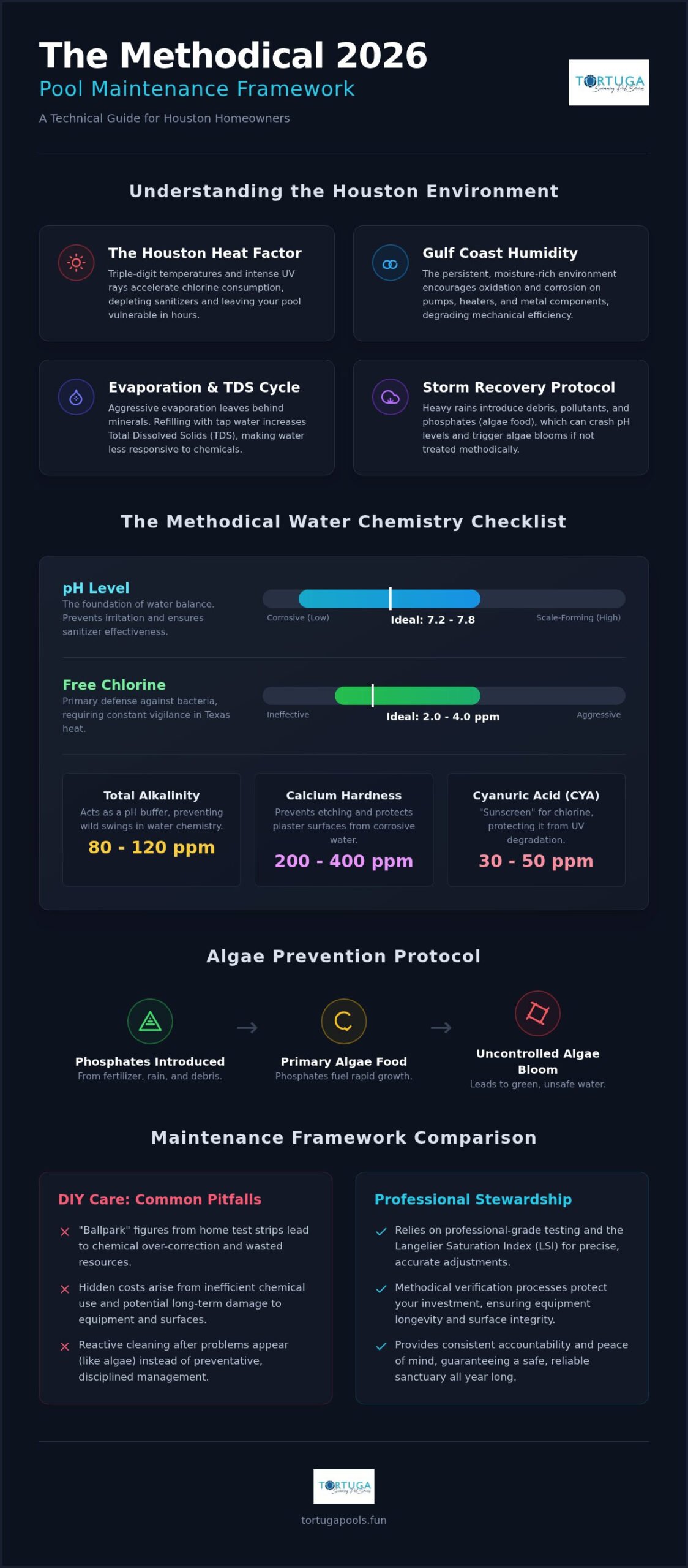
Houston’s subtropical climate isn’t just a backdrop for your summer; it’s a primary driver of your pool’s chemistry. Successful backyard pool maintenance Houston requires a shift from reactive cleaning to disciplined environmental management. The “Houston Heat Factor” is a significant technical challenge. When temperatures sit in the triple digits for weeks, your chlorine consumption doesn’t just increase. It accelerates. UV rays and high water temperatures work together to deplete sanitizers at a rate that can leave your water vulnerable in a matter of hours.
Humidity from the Gulf Coast adds another layer of complexity. It creates a persistent, moisture-rich environment that encourages oxidation on metal components and equipment pads. This isn’t just an aesthetic issue. Rust and corrosion can compromise the seals of your pump or the structural integrity of your heater. Without a steady hand monitoring these physical conditions, mechanical efficiency begins to degrade. A “set it and forget it” mindset often leads to a green pool or a failed motor by July.
The Evaporation and Refill Cycle
Evaporation in Southeast Texas can be aggressive. It often removes several inches of water weekly during peak summer. As water molecules escape into the air, they leave behind dissolved minerals like calcium and salt. When you refill with local tap water, you’re introducing a fresh batch of minerals into the system. This cycle leads to a high concentration of Total Dissolved Solids (TDS). Eventually, the water becomes “stale” and chemically saturated, making it less responsive to standard treatments. We prioritize measurement and testing to ensure your proper pool sanitation remains effective despite these rising mineral levels. Distinguishing between normal environmental loss and a potential leak is a core part of our methodical verification process.
Storm Recovery Protocols
Heavy rainstorms are a staple of Houston life. These events dump more than just water into your pool; they introduce organic debris, nitrogen, and atmospheric pollutants that can crash your pH levels in hours. A single tropical depression might wash a season’s worth of phosphorus into the water, providing a feast for algae. Our recovery protocol is disciplined. We don’t just guess with a “shock” treatment. We verify the alkalinity foundation first to stabilize the water. By identifying and neutralizing phosphorus spikes immediately, we prevent the recurring blooms that often plague Katy and Fulshear homeowners after the rainy season ends.
The Methodical Water Chemistry Checklist
Water chemistry is a discipline of measurement. For effective backyard pool maintenance Houston residents must treat pH and Total Alkalinity as the foundation of their routine. pH should be maintained between 7.2 and 7.8. When pH drifts outside this range, chlorine becomes less effective and the water can irritate skin and eyes. Total Alkalinity serves as the buffer that prevents these pH fluctuations. Because Houston’s tap water is often mineral-heavy, we also track Calcium Hardness to prevent scale from etching your pool’s finish. The Langelier Saturation Index (LSI) is the professional standard for determining if water is corrosive, balanced, or scale-forming.
Maintaining a steady chlorine residual is your primary defense against bacteria. In the Texas heat, this requires constant vigilance. We aim for a free chlorine level between 2.0 and 4.0 ppm when Cyanuric Acid is present. This ensures that the water remains sanitized even during high bather loads or after a sudden afternoon storm. Every chemical adjustment we make is calculated to protect both the swimmers and the expensive pool plaster from the effects of aggressive or scale-forming water.
The Science of Stabilization
Accuracy is non-negotiable. Home test strips often provide “ballpark” figures that lead to over-correction. We rely on professional-grade testing to manage Cyanuric Acid (CYA). This chemical acts as a sunscreen for your chlorine, protecting it from the intense UV radiation of a Texas July. If CYA levels are too low, your chlorine disappears in hours. If they are too high, the chlorine becomes ineffective. By reviewing data on common pool chemical mistakes, we maintain a precise balance that keeps your sanitizer active without wasting resources. Consistency is the key to longevity.
Algae Prevention and Treatment
Algae doesn’t appear by accident; it thrives on neglect and high phosphate levels. Phosphates are the primary food source for algae, often introduced by lawn fertilizers or heavy rain. Methodical phosphate removal is a standard part of a professional routine. When a pool has already lost its clarity, a standard shock isn’t enough. Our green pool algae cleanup Katy framework uses a technical, multi-day approach to kill the bloom and filter out the remains. We verify your water’s health every week to ensure a safe, crystal clear environment. If you want to stop guessing about your water, our Weekly service offers the professional reassurance your home deserves.
Mechanical Integrity: The Equipment Inspection Checklist
A pool is only as healthy as its circulation system. While chemistry manages the water’s biological safety, the mechanical equipment pad ensures that treatment is distributed evenly. For consistent backyard pool maintenance Houston homeowners must move beyond simple surface cleaning and adopt a diagnostic mindset. This means inspecting the pump, filter, and automation components with intentionality every single week. Catching a small drip in March prevents a total system failure during the peak of a July heatwave.
Recognizing the signs of a failing pool pump early can save thousands in emergency replacement costs. We look for audible cues like grinding bearings or visual signs like air bubbles in the pump basket. Seals and gaskets also require a steady hand during inspection. Even a minor leak at a union can lead to salt crystallization and corrosion. Successful backyard pool maintenance Houston residents can rely on depends on this mechanical vigilance.
Circulation and Filtration Efficiency
We monitor pressure gauges with precision. A rise of 8 to 10 PSI above your clean baseline indicates that your filter is becoming restricted. Whether you use DE, cartridge, or sand, a methodical deep-clean is required to restore flow and protect the motor from back-pressure strain. Clearing skimmer and pump baskets is equally vital. Debris-choked baskets force the pump to work harder, shortening its lifespan. If you notice unusual noises or a loss of prime, you may need pool pump repair Katy TX to restore energy efficiency and safety.
Leak Detection and Prevention
Moisture is a warning sign. We inspect every seal, gasket, and union for signs of weepage or salt crystallization. Even a tiny leak can lead to soil erosion or equipment pad shifts over time. If you suspect your water level is dropping faster than the evaporation rates discussed earlier, perform a “bucket test.” This simple verification compares water loss in a bucket to the pool itself. If the pool level drops faster, it’s time to move from routine maintenance to professional leak detection. Acting early protects your investment and your home’s foundation.
Automation and salt cells require regular calibration. A salt cell that isn’t producing chlorine due to mineral buildup can crash your water chemistry in days. We treat your property with the diligence of a protective steward, ensuring every electronic component and mechanical seal is functioning at its peak. This methodical approach prioritizes long-term health over quick fixes.
DIY vs. Professional Maintenance: A Comparison Framework
Choosing between handling your own backyard pool maintenance Houston and hiring a professional is a decision about risk management. DIY care often looks cost-effective on a spreadsheet. However, the hidden expenses add up quickly. You must account for the safe storage of hazardous chemicals, the recurring cost of professional-grade reagents, and the hours spent scrubbing tile in the Texas humidity. Most importantly, a DIY approach lacks the steady hand of a trained technician who can spot a failing seal before it floods your equipment pad. Consistency is the ultimate protective measure for your property.
When chemistry fluctuates wildly between weekend treatments, your pool’s plaster finish suffers. Acidic water etches the surface. Scale-forming water creates rough, unsightly deposits. Over a decade, this lack of methodical care can shorten the lifespan of your pool’s interior by years. Professional stewardship ensures that your environment is balanced and ready for use every day of the week. It’s about longevity. It’s about stability. It’s about ensuring your pool remains a safe sanctuary for your family regardless of your personal schedule or the latest Gulf storm.
The Value of Professional Expertise
A professional partner brings more than just a net and a brush. They provide access to commercial-grade chemicals that are more stable and effective than retail alternatives. Precision testing equipment allows for a level of accuracy that home test strips simply cannot match. This technical diligence leads to the early diagnosis of mechanical issues. By catching a small leak or a worn bearing today, you avoid the significant pool pump repair cost associated with total motor failure. It’s peace of mind for busy Katy and Fulshear families.
Selecting a Methodical Service Partner
Not all service providers are equal. When evaluating a partner, look for local, family-owned accountability. Being “new to the neighborhood” in Katy and Houston means a company is deeply committed to building a reputation through meticulous care and neighborly reliability. Ask about their verification process. A methodical partner will provide a detailed report of every visit, ensuring transparency and stability. If you’re ready for a disciplined, step-by-step approach to your pool care, consider our Weekly service to protect your home and family.
Tortuga Pools: Methodical Stewardship for Your Backyard
At Tortuga Pools, we view backyard pool maintenance Houston as a commitment to long-term property health. Our philosophy is rooted in the “steady hand” approach. We value quality and patience over speed. As a family-owned business new to the neighborhood, we understand the specific challenges faced by homeowners in Katy and Fulshear. We don’t take shortcuts. Every action we take on your equipment pad is intentional and designed for stability. We act as protective stewards for your home and family, ensuring your investment is preserved through every season.
Our approach to backyard pool maintenance Houston prioritizes thoroughness over speed. Neighborly accountability is at the heart of our service. We believe that a well-maintained pool is a safer pool. By focusing on technical precision rather than superficial fixes, we provide a level of care that builds trust and ensures your water remains crystal clear. Consistency is our standard.
Our Weekly Service Protocol
Our protocol is built on a foundation of verification. We don’t guess at your water chemistry. Every visit involves meticulous record-keeping and precise chemical balancing. We provide weekly pool maintenance Katy TX that goes beyond the surface. Our routine includes:
- Detailed chemical analysis and adjustment to maintain LSI balance.
- Thorough cleaning of skimmer baskets, pump baskets, and filters.
- Structural inspection of the equipment pad for leaks or oxidation.
- Verification of automation and salt cell calibration for optimal performance.
This disciplined process ensures that your pool remains a safe, chemically balanced environment for your family every weekend. We provide the professional reassurance that comes from a job done correctly the first time.
Expertise in Technical Systems
Routine cleaning is only one part of our stewardship. We also specialize in technical repairs and swimming pool equipment installation. When a pump fails or a filter requires replacement, we provide a methodical assessment to ensure the new components are sized correctly for your hydraulic system. This precision extends the life of your equipment and prevents the recurring issues that plague poorly installed systems. We treat your property with the same diligence we apply to our own.
Getting Started with a Steady Hand
Transitioning to a professional maintenance schedule should be seamless. We begin with a comprehensive audit of your current water chemistry and mechanical integrity. Whether you need a seasonal pool opening service or a permanent partner for year-round care, we bring the same level of industrious focus to every task. We are your reliable guide through the technical complexities of pool ownership. Schedule your methodical pool assessment today and experience the difference that a disciplined, neighborly approach makes for your home.
Protecting Your Home with Disciplined Pool Stewardship
Houston’s climate demands a level of precision that goes beyond simple weekend chores. Mastering backyard pool maintenance Houston means understanding that every chemical adjustment and mechanical inspection is a protective measure for your home. We’ve discussed how high evaporation rates and Gulf storms require a technical, diagnostic approach to water chemistry and equipment health. By prioritizing consistency over quick fixes, you ensure your pool remains a safe sanctuary rather than a source of stress.
Tortuga Pools provides that steady hand. As a family-owned and locally operated business in Katy, we bring neighborly accountability to every equipment pad we service. Our methodical, step-by-step maintenance protocols are designed for longevity. Our expertise in complex equipment repair and leak detection ensures no detail is left to guesswork. We treat your property with the same diligence as our own. Secure your pool’s health with Tortuga Pools’ methodical weekly service. You can enjoy crystal clear water every weekend when the technical details are handled with professional precision.
Frequently Asked Questions
How often should a backyard pool be maintained in Houston?
A backyard pool should be maintained at least once per week to ensure long-term stability. Houston’s subtropical climate creates a high-demand environment where bacteria and algae can thrive in just a few days of neglect. Consistent backyard pool maintenance Houston residents rely on includes skimming, testing, and verifying mechanical integrity. Skipping even one week during a July heatwave can lead to a chemical crash that requires expensive recovery services later.
What are the most common pool maintenance issues in Katy and Fulshear?
Homeowners in Katy and Fulshear frequently face rapid algae blooms caused by intense sunlight and phosphorus-heavy fertilizers. High humidity also leads to equipment oxidation on the equipment pad, while expansive clay soil can cause structural shifts that result in leaks. We also see frequent chemistry imbalances following heavy Gulf storms. Addressing these local factors requires a disciplined approach rather than a one-size-fits-all solution used in cooler climates.
Can I maintain my own pool chemistry without professional help?
You can maintain your own chemistry, but it requires professional-grade testing kits and a significant time commitment. Home test strips often lack the precision needed to manage the LSI balance accurately. Many homeowners find that the hidden costs of chemical storage and the risk of over-correcting make professional service a more stable choice. A professional partner provides a protective measure for your pool’s finish and mechanical components through expert chemical balancing.
How does the Houston heat affect my pool’s chlorine levels?
High temperatures and UV radiation act as a catalyst for chlorine depletion. Without proper stabilization using Cyanuric Acid, the sun can strip your pool of sanitizer in just a few hours. In Houston, water temperatures often exceed 90 degrees, which significantly increases the metabolic rate of organic contaminants. This means you must test more frequently and maintain a higher chlorine residual than you would in a milder environment to keep the water safe.
What should I do to my pool before a major Houston storm or hurricane?
Never drain your pool completely before a storm, as the rising groundwater in Houston can cause the shell to pop out of the ground. Balance your chemistry ahead of time to provide a sanitizer buffer against organic debris. Turn off the power to your pump and heater at the breaker to prevent electrical damage from surges. After the storm passes, clear large debris immediately and verify your pH levels to prevent an algae bloom.
How do I know if my pool has a leak or is just evaporating?
The bucket test is the most reliable way to distinguish between environmental loss and a structural leak. Place a bucket on the pool step and fill it so the water level matches the pool’s surface. Mark both levels and wait 24 hours. If the pool level drops more than the bucket, you likely have a leak. Houston’s high evaporation rates can be deceptive, so this methodical verification is essential before calling for professional leak detection.
Why is my pool water cloudy even though the chemicals are balanced?
Cloudy water usually indicates a filtration failure or a buildup of Total Dissolved Solids (TDS). Even if your chemistry is balanced, your filter may be clogged with fine debris or minerals that require a deep clean. In Houston, the high mineral content of our tap water can lead to stale water that becomes difficult to clear over time. We recommend a methodical inspection of your filter media and pressure gauges to restore the water’s clarity and sparkle.
Is it better to run my pool pump during the day or night in Texas?
It’s generally better to run your pump during the day when the sun is at its peak. Chlorine is most vulnerable to UV degradation during daylight hours, so active circulation helps distribute sanitizer when it’s needed most. While running the pump at night can save on energy costs, it doesn’t provide the same level of protection against algae growth. Most modern variable-speed pumps allow you to maintain a steady flow rate throughout the day without high electricity bills.