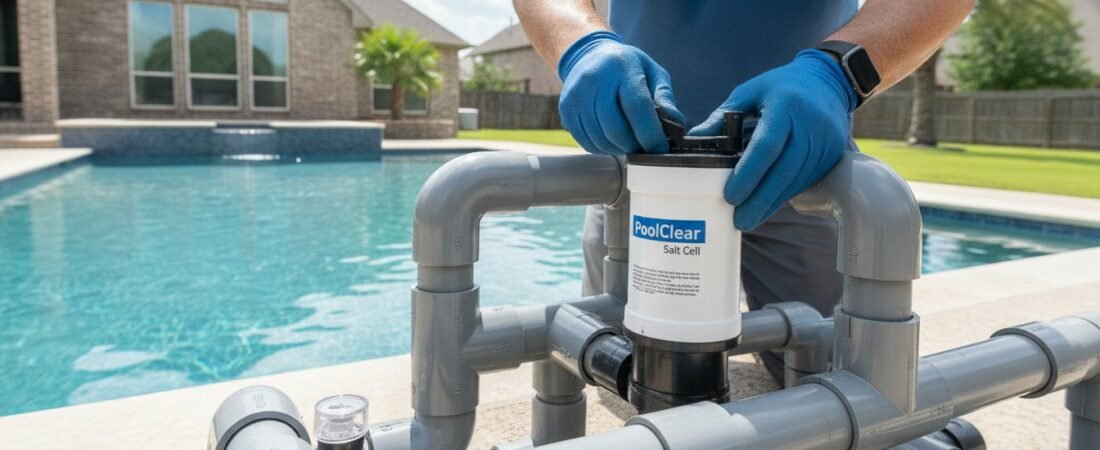
That blinking “Inspect Cell” light on your control panel isn’t just a suggestion; in the peak of a Katy summer, it’s a countdown to a green pool. You’ve likely tried the standard acid wash only to find your water remains cloudy despite your best efforts. It’s frustrating to watch your chlorine levels drop while the Texas sun beats down on your backyard. When you’re facing a potential pool salt cell replacement Katy homeowners often feel stuck between a simple equipment swap and a much more expensive control board repair.
We believe in a methodical approach that prioritizes the long term health of your equipment. This guide will help you accurately diagnose whether your cell has reached the end of its typical three to five year lifespan or if another component is to blame. You’ll learn how to verify equipment faults professionally and select the right replacement to ensure your system remains stable for years to come. We’ll walk through the technical signs of failure, the impact of local hard water, and the disciplined steps required to restore your water clarity.
Key Takeaways
- Learn to distinguish between a failing salt cell and a faulty control board through independent water testing to avoid unnecessary equipment costs.
- Discover why upsizing your equipment capacity can extend the system’s lifespan and maintain water clarity during the peak of the Texas summer heat.
- Understand how a professional pool salt cell replacement Katy service preserves your full manufacturer warranty and prevents damaging leaks on your equipment pad.
- Master the “less is more” rule for acid washing to protect the delicate coating on your cell’s titanium plates from premature wear.
- Identify the precise calcium hardness levels needed to prevent scale buildup and keep your saltwater system running efficiently in Katy’s hard-water environment.
Signs Your Katy Pool Salt Cell Needs Replacement
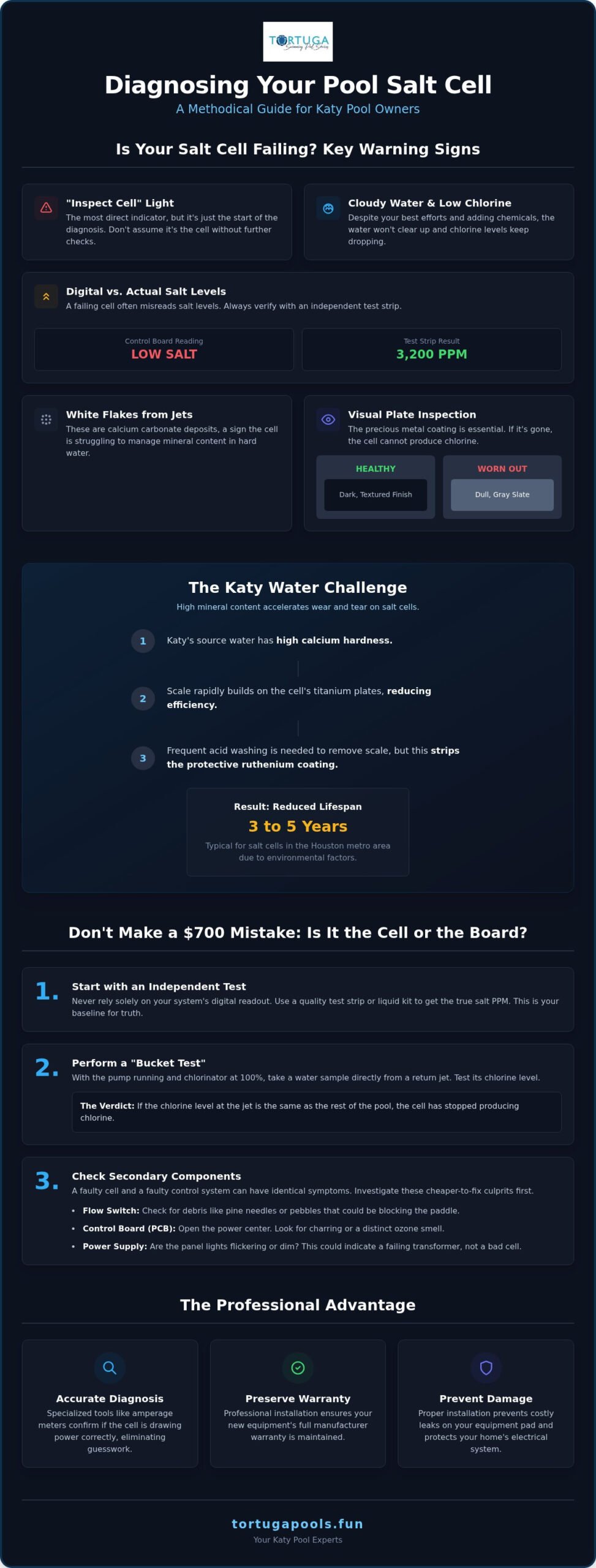
Identifying a failing salt cell requires more than just glancing at your control panel. Often, the system will trigger a “Check Cell” or “Low Salt” indicator even after you’ve balanced the water manually. This is a common point of confusion for many. If your salt levels are verified at 3,200 ppm with a reliable test strip but the board insists they are low, the cell’s ability to conduct electricity is likely compromised. Another clear sign is the presence of white, snowy flakes drifting from your pool jets. These are calcium carbonate deposits. They indicate that the cell is struggling to manage the mineral content in the water. For homeowners considering a pool salt cell replacement Katy professionals often start with a physical inspection of the ruthenium coating. This dark, precious metal coating is essential for electrolysis. If the plates look like dull, gray slate instead of having a dark, textured finish, the cell can no longer generate chlorine effectively.
The Impact of Katy Water Hardness on Cell Life
Katy’s source water is characterized by high mineral content, specifically calcium. While How Salt Water Chlorination Works involves a simple electrolytic process, the high calcium hardness in our region complicates the chemistry. Scale accumulates rapidly on the plates. This forces many homeowners into a cycle of frequent acid washes. While effective at removing scale, every acid bath slightly strips the ruthenium coating from the titanium plates. In the Houston metro area, this environmental factor typically limits a cell’s lifespan to three to five years. It is a steady decline that eventually leads to total failure, particularly when the system is under heavy demand during the peak heat of July and August.
Visual Inspection vs. Digital Readings
Digital readings are a convenience, not a certainty. A failing cell often provides “ghost” readings that don’t match the actual chemistry of your water. To verify the fault, you must perform a visual inspection. Look for “bridging,” where calcium deposits physically connect two plates. This causes a short circuit that stops production. If the plates appear clean but the water remains cloudy, you can perform a “bucket test.” This involves taking a chlorine sample directly from a return jet while the system is running at 100 percent output. If the chlorine level at the jet matches the level in the rest of the pool, the cell has ceased production. This methodical verification ensures you don’t replace expensive equipment based on a guess.
Methodical Diagnosis: Is it the Cell or the Control Board?
Jumping to conclusions about a dead cell often leads to unnecessary expenses. A misdiagnosis where a homeowner replaces a functional cell instead of a failed Printed Circuit Board (PCB) can easily become a $700 mistake. Verification is the only way to avoid this. Always begin with an independent salt test strip. Digital readings on your automation system are merely estimates based on conductivity. If your board reports low salt while your test strip shows a perfect 3,200 ppm, you’ve identified a significant discrepancy. This doesn’t automatically mean the cell is dead. It means the system can no longer “see” the salt accurately.
Open the power center to look for physical clues. A faint smell of ozone or visible charring on the back of the circuit board indicates a relay or solder joint failure. These electrical faults often mimic the symptoms of a cell at the end of its life. A steady hand and a disciplined inspection process are required to differentiate between these two distinct issues. If you wake up to unusual sounds from your equipment pad or notice a sudden drop in water level alongside these errors, consult our guide on emergency pool leak repair Katy homeowners can use to stabilize the situation before a professional arrives.
The Role of the Flow Switch
A stuck flow switch is a common culprit. It tells the system there is no water moving, which prevents the cell from firing. Before you commit to a pool salt cell replacement Katy project, inspect the switch for debris like pine needles or small pebbles. Cleaning the “paddle” can often restore function instantly. Additionally, monitor the transformer. If the lights on your panel are flickering or dim, the power supply itself may be failing rather than the cell plates. These secondary components are much cheaper to fix than the cell itself.
Professional Diagnostic Verification
We utilize specialized amperage meters to measure the exact draw of the cell while it is under load. If the cell is drawing the correct current but still failing to produce, the diagnosis is clear. Our process also includes verifying the power center fuse and internal wiring for any signs of heat stress. This methodical approach ensures we address the root cause, not just the symptom. Following safe pool maintenance practices during these checks protects both the equipment and your home’s electrical system. If you aren’t sure where the fault lies, having an expert perform an equipment repair diagnostic can save you from a costly and unnecessary purchase.
Choosing the Right Replacement Salt Cell
Selecting a component for your pool’s ecosystem requires a disciplined eye. It’s not just about matching a brand name; it’s about ensuring the new equipment integrates seamlessly with your existing automation. When performing a pool salt cell replacement Katy homeowners must consider the duty cycle of the device. A methodical choice here prevents the frustration of early failure and keeps your water chemistry stable during the high-demand summer months.
A common professional recommendation is to “oversize” the cell. For a 20,000-gallon pool, a 40,000-gallon cell is often the superior choice. This isn’t about overkill. A larger cell produces more chlorine in less time. This allows you to run the system at a lower output percentage. Reducing the workload on the plates extends their functional life, providing better value over the typical three to five year lifespan. It’s a strategic move that prioritizes longevity and stability.
Compatibility is also paramount. Modern systems like the Hayward OmniLogic or Pentair IntelliCenter require specific communication protocols. If you replace a T-CELL-15 with a T-CELL-3 without updating the software configuration, the board will miscalculate salt levels and chlorine production. This leads to the same “Low Salt” errors we discussed in the diagnostic section. Verification of your software version before purchase is a critical step in the process.
Popular Brands in Katy Backyards
In neighborhoods like Cinco Ranch and Cross Creek Ranch, the Hayward AquaRite series is a standard installation. These are reliable, workhorse systems that have served local families for years. Pentair IntelliChlor units, such as the IC20 and IC40 models, are also prevalent. They feature integrated displays that offer immediate feedback on cell health. Jandy AquaPure systems utilize a specific three-port cell design that requires careful sensor alignment during installation to prevent flow errors and ensure accurate readings.
Generic vs. Brand Name Cells
Generic cells often tempt homeowners with a lower initial price. However, the total cost of ownership over four years usually favors Original Equipment Manufacturer (OEM) parts. Generic units frequently use thinner ruthenium coatings, leading to faster depletion. More importantly, using a non-branded cell can sometimes void the manufacturer’s warranty on your expensive power center or control board. We prioritize reliable, long-term pool health by recommending OEM replacements that carry full factory backing. This methodical choice protects your investment and ensures your water remains clear without the need for constant troubleshooting.
Professional Installation vs. DIY in Katy
While swapping a cell might look like a simple plumbing task, the hidden risks often outweigh the immediate savings. A pool salt cell replacement Katy project involves more than just unscrewing unions. It requires precision in electrical calibration and a deep understanding of manufacturer warranty protocols. Mistakes in the power center can lead to short circuits, while poor plumbing alignment causes slow leaks that eventually rot your equipment pad. We approach every installation with the same methodical care we would use on our own property, ensuring every connection is secure and every setting is verified.
The Warranty Advantage
Manufacturers are strict about who installs their equipment. For example, a Pentair or Hayward cell often carries a three year warranty when installed by a certified professional. If you choose the DIY route, that protection typically drops to 60 or 90 days. This “Warranty Trap” can be a costly surprise if a component fails prematurely. We document every step of our process, including voltage checks and salt level verification, to provide you with a paper trail that protects your investment. For more details on maintaining your system and selecting the right help, consult our Professional Pool Repair Near Me guide.
Plumbing and Union Maintenance
Precision is essential during the physical installation of the cell. We inspect every O-ring and apply a high quality silicone lubricant to ensure a methodical, leak-free seal. This prevents “salt creep,” a phenomenon where salt water wicks into nearby copper plumbing or heaters, causing accelerated corrosion and equipment damage. Proper alignment is also critical. If the unions are forced together at an angle, the constant pressure and vibration of the pump will eventually cause stress cracks in the cell housing. A disciplined installation ensures the plumbing remains stable and dry. Any unexpected water loss around your equipment pad after installation should be treated as an urgent concern; our guide on emergency pool leak repair Katy professionals recommend covers the immediate steps to take to protect your foundation and equipment.
Finally, the new cell must be calibrated to the control board. Without this step, the board may continue to display the same errors you saw before the replacement, even with a brand new unit. Handling high-voltage connections in the power center is dangerous work that requires a steady hand and professional safety gear. If you want to ensure your system is installed correctly and your warranty remains fully intact, our team provides expert equipment installation services for Katy residents.
Maximizing Your New Salt Cell’s Lifespan
Once you have completed your pool salt cell replacement Katy, the focus shifts from installation to long-term stewardship. A salt cell is a consumable component, but its functional life is largely determined by the precision of your water chemistry. Maintaining a consistent Calcium Hardness level between 200 and 400 ppm is your first line of defense. If calcium levels climb too high, scale will bridge the plates. This forces you into frequent cleaning cycles that eventually degrade the ruthenium coating. We view chemistry as a protective measure for your equipment investment, not just a way to keep the water clear.
Verification of salt levels is equally important. When salt drops too low, the cell works harder to produce the same amount of chlorine. This increased workload generates more heat and accelerates plate wear. By checking your salt levels every two weeks with a reliable test kit, you ensure the system operates within its ideal range. This disciplined approach prevents the unit from working overtime during the peak of the Texas summer.
Routine Maintenance Schedule
Quarterly inspections are the standard for methodical pool care. We recommend a “less is more” rule for acid washing. You should only clean the cell when you see physical scale buildup that cannot be removed with a garden hose. Every acid bath slightly thins the precious metal coating on the plates. When cleaning is necessary, use a dedicated cleaning stand from manufacturers like Zodiac or Hayward. These stands allow you to soak the plates safely without submerging the sensitive electrical cord or damaging the housing.
Consistent chemical balancing is the easiest way to prevent equipment stress. Our guide on Weekly Pool Maintenance in Katy provides a detailed checklist for keeping these levels stable. Don’t forget to test your Cyanuric Acid (stabilizer) regularly. Without proper stabilizer levels, the sun consumes chlorine faster than the cell can produce it. This creates a cycle where the cell runs at 100 percent output just to keep up, significantly shortening its lifespan.
Winter Care for Salt Cells
Temperature plays a significant role in equipment longevity. Most salt systems are designed to stop producing chlorine once the water temperature drops below 52 degrees Fahrenheit. Forcing the system to operate in cold water is inefficient and often triggers “Low Salt” errors even when the salinity is perfect. This is the system’s way of protecting itself from the high voltage required to conduct electricity in cold, dense water.
During the mild Katy winter, many homeowners benefit from using a “dummy cell” or bypass pipe. This allows you to remove the expensive salt cell and store it in a dry, protected area while you manually chlorinate the pool. This simple, methodical step can add an entire season to the life of your equipment. When spring arrives, a professional startup ensures the system is recalibrated and ready for the upcoming heat. While preparing your pool for the season, it’s also a good time to address any other equipment concerns, such as scheduling a pool light repair service to ensure your underwater lighting is safe and fully functional before summer entertaining begins.
Ensuring Long-Term Clarity for Your Katy Pool
Maintaining a saltwater pool in the Texas heat requires a disciplined approach to equipment care. You now know that a “Check Cell” light isn’t always a death sentence for your hardware; it’s often a call for professional verification of your control board or a simple cleaning. By understanding how Katy’s hard water impacts the lifespan of your plates, you can make informed decisions about when to invest in a pool salt cell replacement Katy service and when to focus on chemical balancing.
As a family-owned business, we’re a steady hand for our neighbors in Cinco Ranch and beyond. We include a methodical equipment diagnosis with every service call because we prioritize accuracy over quick fixes. Our team brings expert knowledge of Katy’s specific water chemistry challenges to every backyard. We treat your property with the same diligence we use on our own, ensuring your system is safe and efficient.
Schedule your professional salt cell diagnosis today with Tortuga Pools.
With the right equipment and a consistent maintenance routine, your pool will remain a clear, inviting sanctuary for your family all year long.
Frequently Asked Questions
How much does it cost to replace a pool salt cell in Katy?
The total expense for a salt cell upgrade depends on the brand and the specific capacity of the unit. Major manufacturers like Pentair and Hayward offer various models tailored to specific pool volumes. While the hardware represents the bulk of the investment, professional installation ensures the electrical connections are secure and the manufacturer warranty remains valid. We provide a detailed quote after a methodical diagnosis of your existing power center and plumbing.
How long should a salt cell last in a Texas pool?
A salt cell typically lasts between three and seven years in a Texas environment. The intense summer heat and local water hardness in Katy often mean cells reach the end of their functional life closer to the five year mark. Consistent chemical balancing and proper winter care are the most effective ways to ensure your equipment reaches its maximum lifespan without premature plate depletion or electrical failure.
Can I clean my salt cell instead of replacing it?
You should clean the cell if there is visible scale buildup, but replacement is necessary when the ruthenium coating has worn away. Frequent acid washing eventually strips the plates of the precious metals required for electrolysis. If your system continues to show “Low Salt” errors after a thorough cleaning and verification of water salinity, a pool salt cell replacement Katy professional is needed to restore chlorine production effectively.
What happens if I don’t replace a dead salt cell?
Leaving a dead salt cell in place leads to a rapid decline in water quality and eventual algae growth. Without a functional chlorine generator, you must manually add liquid chlorine or tablets to keep the pool safe for swimming. Over time, the lack of consistent sanitation can result in staining on the pool surface and increased wear on your filtration system as it struggles to clear organic debris and bacteria.
Why does my salt cell say “Inspect Cell” every 500 hours?
The “Inspect Cell” or “Check Cell” light is often a programmed maintenance reminder that triggers every 500 hours of run time. It doesn’t automatically indicate an equipment failure. This is a prompt to perform a visual inspection for calcium scale or debris. Once you’ve verified the plates are clean, you can usually reset the timer on your control board to clear the message and resume normal operation.
Is it better to buy a larger salt cell than my pool size requires?
Installing a cell rated for a larger volume than your pool requires is a strategic choice for longevity. A 40,000-gallon cell on a 20,000-gallon pool can run at a lower output percentage to achieve the same results. This reduced duty cycle preserves the life of the titanium plates and provides a buffer during the extreme heat of a Houston summer when chlorine demand is at its absolute highest.
Will a new salt cell fix my cloudy pool water?
A new salt cell will fix cloudy water only if the cloudiness is caused by insufficient chlorine levels. If the cell has failed, the water will lose its clarity as bacteria and organic matter accumulate. However, if the cloudiness is due to high calcium hardness or poor filtration, a new cell won’t solve the issue. We perform a full water analysis to verify the root cause before recommending equipment changes.
Does Tortuga Pools provide emergency equipment repairs in Fulshear?
We provide emergency repairs for residents in Fulshear, Katy, and the surrounding areas. Our team understands that equipment failures don’t always happen during business hours, especially during the peak of summer. We offer a methodical approach to urgent repairs, ensuring that your filtration and sanitation systems are restored quickly and correctly to protect your property. We take pride in being a reliable guide through technical maintenance for our local neighbors.