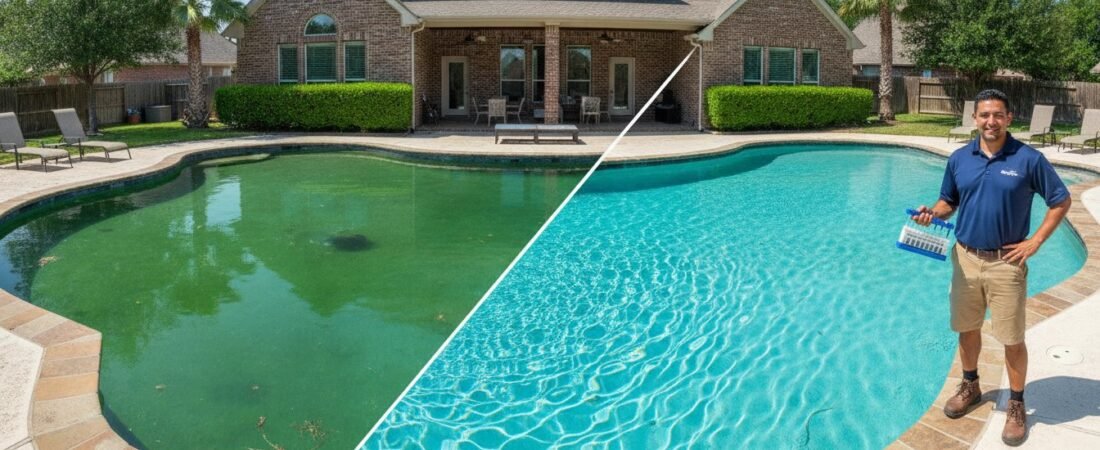
What if the hundreds of dollars you just spent at the pool store actually made your algae problem worse? It’s a frustrating reality for many homeowners in Fort Bend County. You see a tint of green, dump in a “miracle” jug of shock, and wait. Three days later, your backyard still looks like a swamp. The Texas sun is only making the bloom more aggressive. You’re left with a pool that feels like an embarrassment rather than a sanctuary for your family.
We understand that a green pool is more than just an eyesore. It’s a safety concern and a persistent drain on your time. For a successful green pool algae cleanup Katy weather requires more than a quick fix. It demands a disciplined, step-by-step recovery process. You need a steady hand to navigate the delicate balance between high humidity, 100-degree days, and the hard water common to our local aquifer.
This guide outlines the exact, methodical system used to restore clarity and ensure it lasts. We will walk through the rigorous steps of chemical verification, equipment diagnosis, and the long-term maintenance habits that stop the cycle of recurring blooms. You’ll learn how to identify the root cause of the swamp and implement a maintenance plan that stands up to the Texas heat. It’s time to stop guessing and start following a proven path to swimmable water.
Key Takeaways
- Learn why Katy’s high humidity and heat create a “petri dish” effect that requires more than just a single jug of store-bought shock.
- Master the methodical, step-by-step process for a successful green pool algae cleanup Katy homeowners can rely on to restore crystal clarity.
- Understand why your filtration system is the secret weapon in recovery and why you likely need two filter cleanings to handle the “dead algae trap.”
- Discover how to evaluate Total Dissolved Solids (TDS) to decide if your water is salvageable or if a drain and clean is the more cost-effective path.
- Establish a stable maintenance plan based on consistency over intensity to keep your pool swim-ready throughout the grueling Texas summer.
Understanding the Katy “Swamp”: Why Pools Turn Green Fast
An algae bloom is more than just a cosmetic issue. It is a rapid biological takeover. In the span of 24 hours, a few microscopic spores can multiply into millions, turning your clear water into a thick, opaque swamp. For homeowners seeking a green pool algae cleanup Katy environmental factors play a massive role. Our 2026 humidity levels have stayed consistently high, creating a literal petri dish in your backyard. This environment allows organic matter to thrive at an accelerated pace.
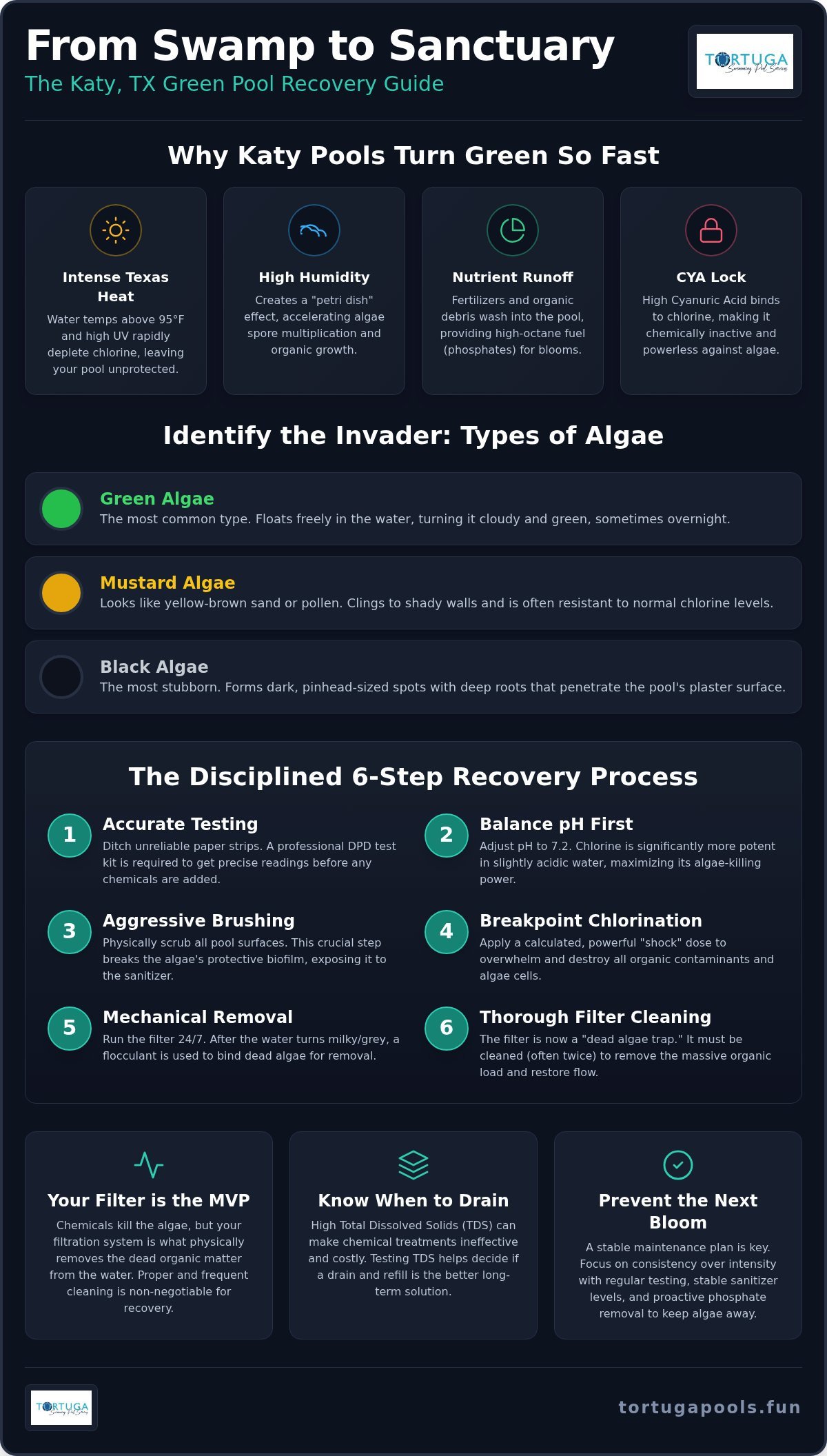
Identifying the specific invader is the first step in our methodical process. Most residents deal with Green Algae. It floats freely and clouds the water quickly. Mustard Algae is more stubborn. It looks like yellow sand and clings to shady spots, often resisting standard chlorine levels. The most severe is Black Algae. It forms dark, pinhead-sized spots that root deep into the pool’s plaster. Dealing with these infestations requires Understanding Algaecides and how they interact with your specific water chemistry. Many people try to fix the problem by dumping in more shock, but this often fails due to Cyanuric Acid (CYA) lock. When CYA levels are too high, they bind to the chlorine. This prevents it from killing the algae, leaving the sanitizer chemically inactive despite high readings.
The Texas Heat Factor
Katy summers are relentless. When pool water temperatures exceed 95°F, standard chlorine dosages lose their effectiveness almost instantly. High UV indexes further accelerate this by burning off sanitizer before it can reach the algae spores. In a Houston summer, we often encounter high Chlorine Demand. This is a specific state where the volume of organic matter in the pool exceeds the sanitizer’s ability to keep up, leaving the water entirely unprotected.
Nitrates and Phosphates: The Algae Fuel
Algae needs food to grow. In Katy, that food often comes from lawn fertilizers and organic runoff. Heavy Texas rainstorms wash these nutrients directly into your pool. High levels of nitrates and phosphates act as a high-octane fuel for blooms. This is why a professional green pool algae cleanup Katy must include phosphate testing. If you don’t remove the food source, the algae will return as soon as the chlorine levels dip. Consistency in testing is the only way to ensure long-term clarity. We focus on these measurements to prevent the cycle of recurring blooms.
The Methodical Green-to-Clean Process: A Step-by-Step Recovery
Restoring a pool requires a steady hand and a commitment to precision. We don’t believe in guesswork. A successful green pool algae cleanup Katy homeowners can count on begins with accurate data. Throw away the paper test strips. They are often inaccurate and cannot measure the high chlorine levels needed for a full recovery. Instead, we use professional DPD test kits to verify exact chemical levels before adding a single drop of sanitizer. This disciplined approach ensures we aren’t wasting your money on unnecessary treatments. To see exactly how this process unfolds from start to finish, our green to clean pool service case study walks through a real swamp recovery using our 5-day protocol.
Safety remains our priority throughout this process. Handling concentrated liquid chlorine or muriatic acid in the 100-degree Katy heat is hazardous. Fumes are more volatile in the sun, and physical exertion can lead to heat exhaustion. We follow strict safety protocols, mirroring the CDC Pool Operation Guidelines, to protect both the technician and your property. We never rush the chemistry. We wait for the water to respond before moving to the next stage.
Phase 1: Chemical Eradication
The first step isn’t shocking; it’s balancing. We adjust the pH to 7.2. Chlorine is significantly more effective in slightly acidic water. Once the environment is ready, we calculate the Breakpoint Chlorination dose. This is the specific amount of chlorine required to break the molecular bonds of contaminants. We then perform aggressive brushing of the walls and floor. This physical action breaks the algae’s protective biofilm. Without brushing, the chemicals might only kill the top layer of the bloom, leaving the roots to grow back in days.
Phase 2: Mechanical Removal
Executing a proper green pool algae cleanup Katy requires a transition from chemical eradication to physical removal. Killing the algae is only half the battle. Dead algae cells turn the water a milky grey or white. To remove this organic load, we use a flocculant to bind the particles together, causing them to settle on the floor. Understanding the difference between treatment options is critical at this stage — our guide on pool flocculant vs clarifier explains exactly which product fits your timeline and filtration system to avoid costly equipment damage. The most critical step is the “Vacuum to Waste” technique. By bypassing the filter entirely, we send the debris out the backwash line. This prevents the filter from becoming hopelessly clogged with dead cells. Finally, we re-balance the water for long-term health. If you feel overwhelmed by the technical requirements of this process, our team provides Weekly Cleaning & Maintenance to ensure your water stays stable through the summer.
Beyond Chemicals: Why Your Filtration System is the Secret Weapon
Chemicals are designed to kill algae, but they cannot remove it from your water. This is the stage where many DIY attempts fail. The “Dead Algae Trap” occurs when millions of microscopic dead cells are pulled into your filtration system, clogging the media in a matter of hours. For a successful green pool algae cleanup Katy equipment must be in peak operating condition. A clogged filter restricts water flow, which prevents the even distribution of sanitizer. This creates a dangerous cycle where new algae can begin to bloom in stagnant areas even while you are adding chemicals.
A methodical recovery typically requires two separate filter cleanings. We perform the first cleaning before the process begins to ensure maximum flow and pressure. The second cleaning is mandatory once the water clears to remove the massive organic load trapped during the eradication phase. While performing these tasks, we adhere to strict Pool Chemical Safety standards. Handling equipment that has been exposed to high-dose sanitizers requires a steady hand and protective measures to ensure the safety of your home and family.
DE vs. Cartridge Filters in Algae Recovery
DE filters offer the finest filtration, but they are the most susceptible to rapid clogging during a major bloom. Backwashing alone is rarely enough for a full recovery. The grids often require a manual tear-down and deep cleaning to remove the sticky algae residue that backwashing leaves behind. With cartridge filters, we evaluate the physical integrity of the elements. If a cartridge is over two years old or has endured multiple severe blooms, the fibers often become permanently matted. In these situations, replacing the elements is the only way to restore the filtration efficiency needed to beat the Texas heat.
Pump Run Times and Circulation
During the recovery phase, your pump must run 24/7. Stagnant water is an open invitation for a secondary bloom. We also inspect the system for suction leaks. If you notice air bubbles in the pump basket or returning through the jets, your filtration efficiency is compromised. Recognizing these as signs of a failing pool pump early can prevent a minor issue from escalating into a total circulation failure during a critical recovery window. This reduced flow allows “dead spots” to form, typically behind ladders or in deep corners, where algae can hide from the pump’s reach. If your pump is showing signs of strain during this critical recovery window, understanding when to repair or replace it is essential — our guide on pool pump repair Katy TX walks through the diagnostic process and the “50% rule” for making that decision. Consistent monitoring of these mechanical components is a core pillar of our Weekly Pool Maintenance in Katy, TX: Homeowner Guide. We prioritize equipment longevity by ensuring your pump never has to struggle against an avoidable blockage.
Comparing Recovery Methods: Chemical Shock vs. Drain and Clean
Deciding between a chemical recovery and a full drain is a matter of technical verification. Total Dissolved Solids (TDS) represent the accumulation of everything added to the water over years. When TDS levels are too high, the water becomes “saturated,” and chemicals simply stop working. For a green pool algae cleanup Katy homeowners must also consider the current water restrictions. As of August 2026, the City of Katy’s Drought Contingency Plan influences this choice. If the city moves into Stage 3 Severe conditions, draining and refilling existing pools is prohibited. We always verify local regulations and current triggers before recommending a full drain.
Cost is another factor. In some cases, the volume of liquid chlorine and specialty algaecides needed to clear a “black swamp” exceeds the cost of fresh water. However, draining a pool in Katy carries significant risk. Our high water table and heavy clay soil create immense hydrostatic pressure. If a pool is drained without proper hydrostatic valve management, the entire shell can “pop” out of the ground. This is a catastrophic structural failure. A professional drain and clean is a protective measure for your property. We use a steady hand to manage the drainage speed and surface protection to ensure the structural integrity of your oasis remains intact.
When Chemicals Aren’t Enough
Sometimes, chemistry reaches its limit. If your Cyanuric Acid (CYA) levels exceed 100ppm, you are in a state of “chlorine lock.” No amount of shock will effectively sanitize the water because the stabilizer has bound the chlorine molecules. Black Algae also presents a unique challenge because it roots deep into the plaster. We follow a 48-hour rule. If the water hasn’t begun transitioning to a cloudy blue or grey within two days of aggressive treatment, the chemicals are losing the battle. At this point, a more intensive approach is required to protect the longevity of your pool’s surface.
The Professional Drain and Acid Wash
An acid wash is a craftsman’s tool for restoring a stained surface. It involves applying a measured mixture of water and muriatic acid to strip a thin layer of plaster, revealing the clean finish beneath. This process removes the deep structural staining left by severe algae blooms. Once the wash is complete, we immediately begin the refilling process to prevent the plaster from drying and cracking in the Texas sun. The final step is a precise “Startup” chemical balance to protect the fresh water. If you are facing a total swamp, our Green Pool & Algae Cleanup service provides the methodical expertise needed to handle these high-risk procedures safely.
Preventing the Next Bloom: A Stable Maintenance Plan for Katy
A successful recovery is a victory, but the real goal is long-term stability. At Tortuga Pools, we utilize the “Tortuga Method.” This philosophy prioritizes consistency over intensity. It is far more effective to maintain a steady, protective level of sanitizer than to fluctuate between neglect and heavy chemical dosing. For a permanent green pool algae cleanup Katy homeowners must commit to a disciplined schedule. The Texas heat is relentless. It will exploit any gap in your maintenance routine within hours. Weekly testing is the only way to verify that your water remains a hostile environment for algae spores.
We view phosphate removers as a vital insurance policy. While we previously discussed how phosphates act as fuel for blooms, regular removal of these nutrients ensures that even if your chlorine levels dip, the algae has nothing to eat. This extra layer of protection is essential for the 2026 summer season, where record temperatures have made standard maintenance more challenging. Investing in weekly pool maintenance often pays for itself. It prevents the high costs of emergency chemical treatments, filter replacements, and the potential need for a risky drain and clean.
The Post-Storm Protocol
Katy thunderstorms are a primary trigger for sudden algae blooms. These storms dump nitrogen-rich rain and organic debris directly into your oasis. You must take immediate action once the clouds clear. Our protocol includes three essential steps:
- Empty Skimmer Baskets: Remove leaves and debris immediately to maintain proper flow and oxygenation.
- Test and Boost: Check your sanitizer levels. Rainwater dilutes your chemistry, so “boosting” the chlorine before the sun comes out is critical.
- Brush the Walls: Spend five minutes brushing the shady spots to prevent spores from gaining a foothold.
Professional Oversight
There is no substitute for a “steady hand” technician who understands the nuances of the local climate. Professional oversight means spotting a failing check valve or a slight rise in filter pressure before it leads to a total system failure. We perform comprehensive equipment health checks as part of every recurring service. This proactive approach protects your investment and ensures your family always has a safe, clear place to swim. Let Tortuga Pools handle the hard work with our professional algae cleanup and weekly care. Our methodical process provides the peace of mind that your backyard will remain a sanctuary, not a swamp.
Reclaiming Your Backyard Sanctuary
Restoring a pool from a biological swamp to a crystal-clear oasis is not a matter of luck. It’s the result of disciplined measurements, mechanical precision, and the steady hand of an expert. You now understand that a successful green pool algae cleanup Katy homeowners can rely on requires more than just chemicals; it demands a deep respect for filtration health and chemical balance. By addressing the root causes like high phosphates and CYA lock, you move beyond the cycle of temporary fixes and into a state of long-term stability.
As a family-owned Katy business, we take pride in our methodical, no-shortcut approach to water health. We specialize in green to clean pool service restoration because we believe every family deserves a safe, swimmable environment that stands up to the Texas heat. Our craftsmen treat your property with the same diligence they’d their own, prioritizing equipment longevity and technical accuracy over quick, superficial results. Restore Your Pool with Tortuga Pools’ Methodical Cleanup Service and let us handle the technical burden for you. Your clear, refreshing oasis is just a methodical step away.
Frequently Asked Questions
Is it safe to swim in a green pool?
No, it’s not safe to swim in a pool with an active algae bloom. While algae itself isn’t always toxic, its presence proves that your sanitizer levels are insufficient to kill harmful bacteria and pathogens. This environment allows organisms like E. coli to thrive. Additionally, the lack of water clarity creates a significant safety risk because the bottom of the pool is no longer visible to supervisors.
How much chlorine does it take to fix a green pool in Katy?
The exact amount depends on your pool’s volume and current Cyanuric Acid levels. A successful recovery requires reaching “Breakpoint Chlorination,” which is typically ten times the amount of combined chlorine present. For an effective green pool algae cleanup Katy weather often demands higher doses than standard labels suggest. We use precise DPD testing to calculate the specific gallonage of liquid chlorine required for your unique water chemistry.
Why did my pool turn green even though the chlorine level is “good”?
This paradox usually occurs due to “chlorine lock” caused by high stabilizer levels. If your Cyanuric Acid (CYA) exceeds 100ppm, it binds to the chlorine and prevents it from sanitizing the water. Your test kit may show a high reading, but that chlorine is chemically inactive. High phosphate levels also act as a high-octane fuel, allowing algae to outpace even a healthy level of sanitizer.
Do I need to drain my pool if it has algae?
Draining is a last resort used when Total Dissolved Solids (TDS) or stabilizer levels make chemical treatment impossible. If your water is saturated with old minerals, fresh chemicals won’t respond. However, draining in Katy’s clay soil is risky due to hydrostatic pressure that can pop a pool shell. We always verify the 2026 drought stage restrictions and equipment health before recommending a full water replacement.
How long does a “Green to Clean” service usually take?
A methodical recovery typically requires 48 to 72 hours of continuous effort. While chemicals can kill the algae in a few hours, the mechanical filtration of millions of dead cells takes much longer. We don’t take shortcuts during this window. This timeframe allows for the necessary 24/7 circulation, multiple filter cleanings, and the final chemical balancing needed to ensure the bloom doesn’t immediately return.
Can a pool filter remove algae on its own?
No, a filter is a mechanical tool, not a sanitizer. It cannot kill live algae spores. Live algae is microscopic and can often pass through filter media or clog it so quickly that circulation stops entirely. You must first use an effective sanitizer to kill the bloom. Once the algae is dead and clumped together, the filter can then perform its job of physically removing the debris from the water.
What is the difference between green algae and mustard algae?
Green algae is a common, free-floating variety that turns the water opaque and slimy. Mustard algae is far more stubborn and chlorine-resistant. It often looks like yellow sand or dust settling in the shady spots of your pool. While a standard green pool algae cleanup Katy process handles green algae effectively, mustard algae requires much higher chlorine concentrations and aggressive physical brushing to break its outer shell.
How do I prevent my pool from turning green after a heavy rain?
Immediate intervention is the only way to beat a post-storm bloom. Rainwater introduces nitrogen and organic debris that consume your chlorine and feed dormant spores. You should empty your skimmer baskets immediately to maintain flow. Testing and “boosting” your chlorine levels before the sun comes out ensures that your sanitizer can neutralize the new contaminants before the Texas heat triggers a rapid biological takeover.