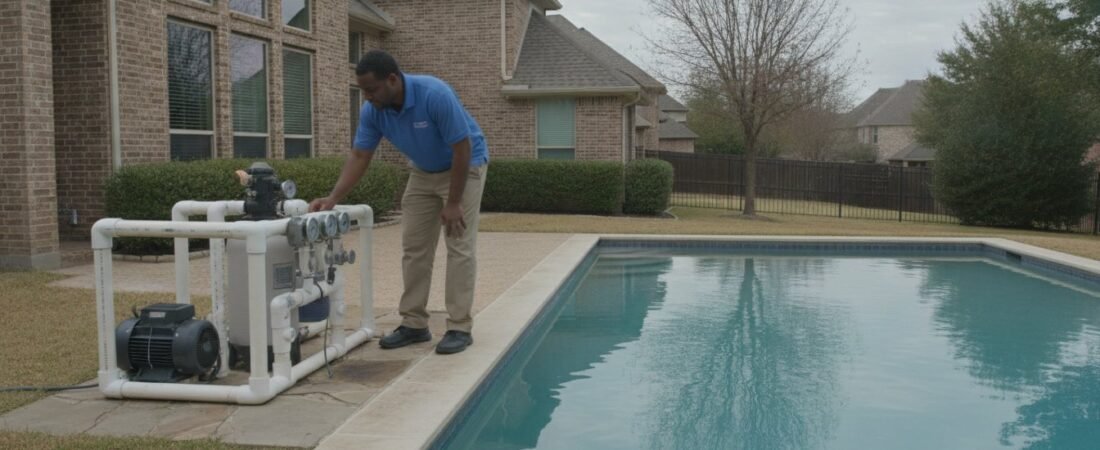
What if the traditional advice to “shut down” your pool for the season is actually the fastest way to invite a $5,000 repair bill? In Texas, the concept of winterization is often misunderstood. It isn’t about a total system shutdown; it’s a methodical defense strategy against climate volatility. Many homeowners feel the constant weight of “freeze anxiety,” worrying that a sudden power outage or a faulty sensor could lead to cracked pipes and ruined pumps. You’ve likely felt the frustration of choosing between running your equipment 24/7 or risking expensive damage during an unpredictable cold snap.
We understand that your pool is a significant investment in your home and family life. This guide delivers a precise plan to secure that investment using a professional pool winterization service Texas homeowners can rely on for stability and longevity. You’ll learn the specific steps to maintain water clarity, protect your plumbing from the 5 to 15 hard freezes expected this 2026 season, and ensure your equipment remains operational without skyrocketing your utility bills. We’ll walk through a disciplined checklist that replaces guesswork with professional certainty, preparing your backyard for a seamless spring opening.
Key Takeaways
- Learn why “active wintering” is the standard for the Texas climate and why draining lines can lead to structural issues in local clay soil.
- Understand the mechanics of freeze protection sensors and how to verify your equipment is prepared for the 5 to 15 hard freezes expected in 2026.
- Use our decision framework to choose between a full pool winterization service Texas experts recommend and a routine active maintenance plan based on your equipment’s age.
- Master a methodical checklist for pre-freeze preparation, focusing on water levels and skimmer clearance to prevent stagnant water from expanding in pipes.
- Discover the benefits of a professional “Winter Readiness Audit” to identify plumbing vulnerabilities before they require emergency repairs.
Understanding Texas Winterization: Why it Differs from Northern States
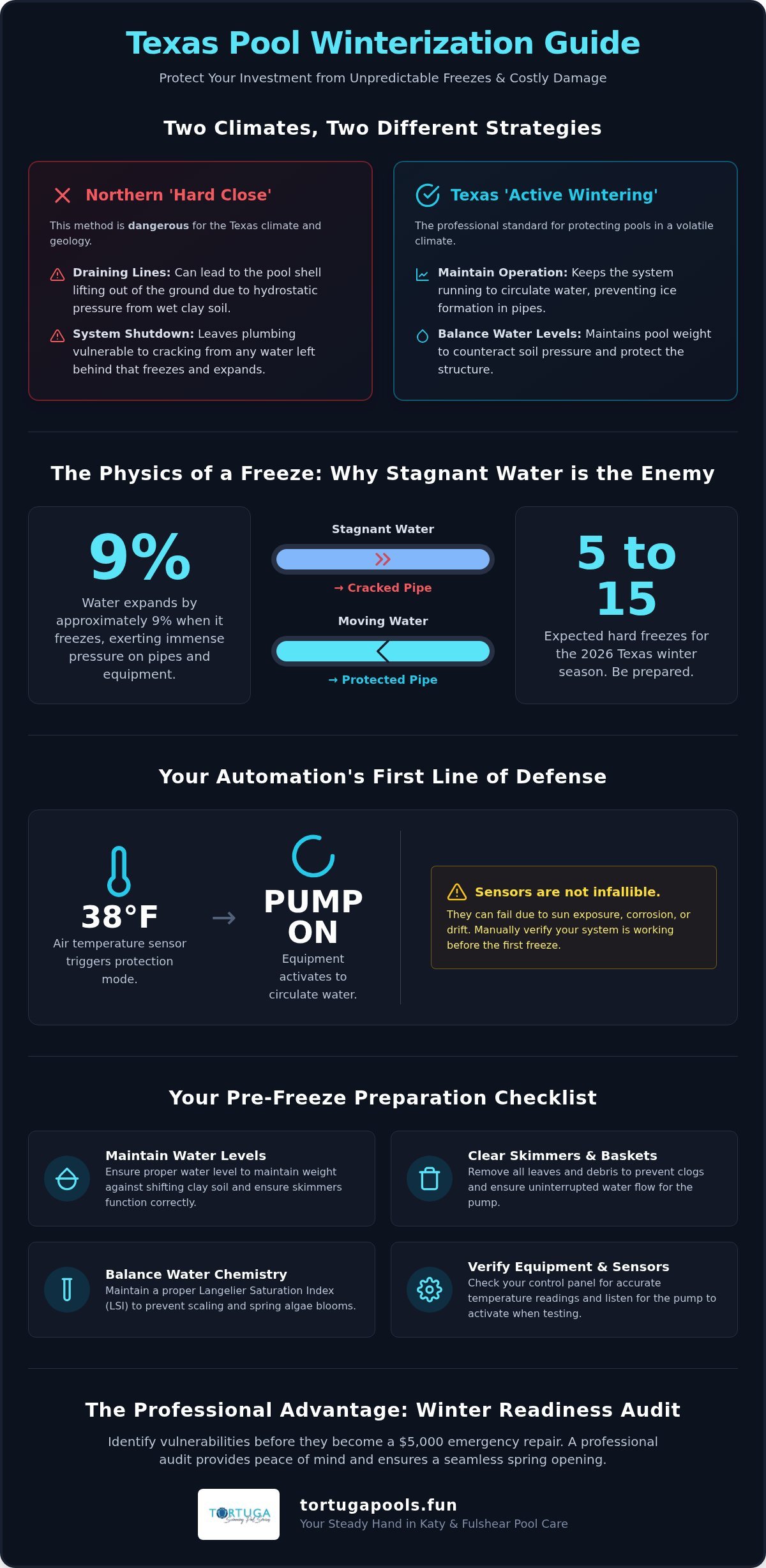
In Northern states, winterizing a pool involves a “hard close” where technicians drain the lines, blow out the pipes, and plug every return. In Texas, this approach is rarely ideal and often dangerous for the pool’s structure. Our climate is characterized by volatility. We experience sharp, dangerous freezes followed by 75-degree afternoons. This inconsistency requires a strategy known as active wintering. Instead of shutting down, we keep the system operational but adjust the parameters to handle the cold. The 2021 “Big Freeze” changed the landscape of Texas pool care forever. It taught us that automated systems are helpful, but they require manual verification and a methodical plan to prevent catastrophic failure.
Choosing a pool winterization service Texas homeowners can rely on means finding a partner who understands our unique geology. Texas soil, particularly in Katy and Fulshear, contains heavy clay that shifts with moisture levels. If you drain your pool water below the recommended level during a rainy winter, the hydrostatic pressure from the high water table can literally lift the pool shell out of the ground. Certified pool service technicians focus on maintaining the weight and balance of the water to protect against these structural risks while ensuring the plumbing stays safe.
The Concept of Active Wintering
Active wintering is the process of maintaining water levels and chemistry throughout the cooler months while the equipment remains in use. Your pump serves as a heat distributor. As long as water is moving through the PVC pipes, it is significantly harder for ice to form and expand. This expansion is what causes pipes to crack and filter tanks to burst. We focus on consistency. We keep the skimmer baskets clear and the water chemistry balanced. Algae growth slows down in the winter, but it doesn’t stop. A disciplined chemical routine now prevents a “green pool” nightmare when the first warm spell hits in February.
When a Full Closing Might Actually Be Necessary
There are specific scenarios where a more intensive closing is the correct choice. If you plan to be away for an extended vacation or if you’re dealing with major equipment failures that won’t be repaired before the first freeze, a professional shutdown is a safer path. A “soft close,” where a homeowner simply turns off the timer and hopes for the best, is never recommended. Tortuga Pools evaluates your specific backyard micro-climate to determine the best course of action. We look at wind exposure, the age of your plumbing, and your equipment’s history. This methodical evaluation ensures your protection strategy is based on facts, not guesswork. It’s a protective measure for your home and family.
The Mechanics of Freeze Protection: Protecting Equipment and Plumbing
Moving water is the primary defense against a Texas freeze. The physics are simple. Moving water requires much lower temperatures to freeze than stagnant water. When water remains still in a PVC pipe and the temperature drops below 32°F, it expands by approximately 9 percent. This physical expansion exerts immense pressure, often exceeding the burst strength of the pipe or the equipment housing. A professional pool winterization service Texas homeowners rely on ensures that this circulation remains constant and that every auxiliary line is protected from expansion damage.
Most modern automation systems utilize air temperature sensors to trigger freeze protection mode. These sensors typically activate the pump when the ambient air reaches 38°F. This 6-degree buffer is vital because plumbing in shaded or wind-exposed areas can reach freezing temperatures faster than the sensor itself. However, these sensors are not infallible. They can fail due to sun exposure, corrosion, or calibration drift. If your control panel shows an impossible temperature reading, seeking professional pool repair near me is a necessary step to ensure your system reacts correctly when the mercury drops.
We also address a common oversight: winter water chemistry. Maintaining a proper Langelier Saturation Index (LSI) during the cold months protects your equipment from scaling and prevents the massive algae blooms that typically follow a Texas winter warm-up. Balanced water ensures that your system stays healthy through the off-season, making the spring opening a simple process rather than a chemical battle. This same principle of chemical precision applies from the very beginning of a pool’s life — if you’re in a newly built home, understanding the pool startup service new home process is equally critical to protecting your plaster and equipment long-term.
The Vulnerability of Pool Heaters and Filters
Heaters are often the first components to fail during a hard freeze. The copper heat exchanger inside contains thin-walled tubes designed for efficient heat transfer, but they cannot withstand the pressure of expanding ice. If water is trapped in the heater manifold during a power outage, the copper will crack. Before the first frost, we recommend a professional filter cleaning. A clean filter ensures maximum flow rate, which is the most effective way to keep water moving through the heater and filter tank. If a total power failure occurs, you must be prepared to manually remove the drain plugs from the pump, filter, and heater manifold to evacuate the water.
Automated vs. Manual Freeze Protection
Automation provides security, but it requires a “steady hand” for verification. You should manually check your system settings to ensure the freeze trigger is set to at least 38°F. Verify that all valves are in the open position so water circulates through every part of the system, including waterfalls and cleaners. A common sign of a failing sensor is a pump that runs continuously even when the air is warm, leading to unnecessary energy costs. To ensure your system is ready for the 2026 winter season, our team can provide a methodical equipment check to verify every sensor and failsafe is operational.
Full Winterization vs. Active Maintenance: Choosing Your Strategy
Choosing the right off-season strategy depends on your equipment’s age, your winter schedule, and the specific micro-climate of your backyard. For most homeowners in Katy and Fulshear, the choice rests between “active maintenance” and a “hard winterization.” A professional pool winterization service Texas experts provide offers a high return on investment by preventing the average freeze damage repairs that often range from $1,500 to over $5,000. This methodical approach ensures your property remains a source of relaxation rather than a financial burden. We view this as a protective measure for your home and family, prioritizing long-term health over quick fixes.
During the colder months, weekly pool maintenance shifts its focus. We transition from heavy debris removal and high chlorine demand to equipment verification and water balance stability. Even though the pool is used less, the need for precision remains high. Chemical stabilization is the cornerstone of this period. By maintaining a balanced Langelier Saturation Index (LSI), we prevent the water from becoming corrosive or scale-forming, which protects your pool’s plaster and internal components during the off-season.
The Active Maintenance Framework
The active maintenance framework is the most common choice for Texas pools. It involves reducing pump run times to conserve energy while ensuring the freeze guard is ready to take over when temperatures drop. We adjust chlorine output for colder, slower-moving water. Because algae growth slows down but does not stop, professional chemical balancing is essential. We monitor these levels to prevent a “green pool” outbreak during the unexpected 80-degree days that often occur in a Texas January. This strategy keeps the pool “swim-ready” for the first warm days of spring.
The Hard Winterization Framework
A hard winterization is a more intensive process where we pull all drain plugs and “blow out” the plumbing lines with air. This ensures no water remains in the pipes to expand and cause cracks. This strategy is ideal for homeowners who travel frequently or have older equipment that may not reliably trigger automated freeze protection. In heavily wooded areas of Fulshear, this framework often includes the installation of specialized mesh safety covers. These covers block sunlight to prevent algae and keep heavy leaf fall from clogging the system. This process requires a steady hand and professional oversight to avoid air-locks or secondary pipe bursts during the procedure.
A Methodical Checklist for Texas Freeze Events
Managing a Texas freeze requires a disciplined approach that begins well before the first snowflake falls. High-stakes weather events in Katy and Fulshear demand more than just hope; they require a verified sequence of actions. A professional pool winterization service Texas homeowners trust focuses on these critical windows: pre-freeze preparation, mid-freeze monitoring, and post-freeze inspection. This methodical process ensures that your equipment remains a stable asset rather than a liability when the mercury drops below 32°F.
Your pre-freeze checklist starts with water levels. Ensure the water is at the midpoint of the skimmer tile. If the level is too low, the pump may draw in air, leading to a loss of prime that stops circulation. Clear all skimmer and pump baskets of debris. During a winter storm, heavy winds often dump leaves into the pool. If these block the flow, your freeze protection system will run a dry pump, causing the motor to overheat and the internal seals to melt. Mid-freeze, you must manually verify that water is moving through all features, including waterfalls and secondary lines, to prevent stagnant pockets from expanding.
Emergency Protocol: What to Do If the Power Fails
Power outages represent the most significant risk to your plumbing. If the electrical grid fails during a hard freeze, your automated protection is gone. You must act quickly using the “Drain and Pray” method. This involves removing all drain plugs from the pump housing, the filter tank, and the heater manifold. Keep an emergency “Pool Winter Kit” in your garage containing pliers, a flathead screwdriver, and a reliable headlamp. Never attempt to use external heat sources like space heaters or propane torches on PVC pipes. These tools create extreme fire hazards and can warp the plastic, leading to permanent structural failure. The goal is to evacuate the water before it has time to turn into ice.
The Thaw: Inspecting for Damage
The danger doesn’t end when the sun comes out. As the ice melts, you must perform a methodical inspection of the entire equipment pad. Look for moisture pooling around the base of the pump or filter. You are searching for hairline cracks that may have formed in the plastic housings. If you notice any leaks, keep the system off and call for a professional assessment. Check for signs of a failing pool pump, such as unusual grinding noises or a humming motor that refuses to turn. If the freeze caused significant internal damage, you may need an emergency pool repair to restore your system before the water turns green. To ensure your backyard is fully protected for the 2026 season, you can request a professional winter audit from our team today.
Professional Winter Care with Tortuga Pools: Your Steady Hand in Katy
Local expertise is the most critical component of a successful winter strategy in Southeast Texas. Our environment presents challenges that generic guides often ignore. The heavy clay soil in Katy and Fulshear expands and contracts with temperature shifts, putting unique stress on underground plumbing. A high water table means that improper drainage can lead to catastrophic structural failure. Choosing a pool winterization service Texas families trust ensures that your maintenance plan is built on a foundation of local geological and climate data. We act as protective stewards of your property, treating your equipment with the same diligence we apply to our own homes.
Our approach is rooted in consistency and technical accuracy. We don’t rely on “gut feelings” when it comes to freeze protection. Instead, we use a disciplined verification process to ensure every component is ready for the volatile weather ahead. This methodical care during the off-season leads directly to a seamless spring opening. By maintaining water chemistry and equipment health through the winter, we eliminate the need for expensive “green-to-clean” recoveries or emergency repairs when the swimming season begins.
Our Methodical Winter Readiness Audit
The Tortuga Pools “Winter Readiness Audit” is a comprehensive inspection designed for total system stability. We perform a precise calibration of your freeze sensors and automation triggers, verifying that the pump activates at exactly 38°F to provide a necessary safety margin. Our technicians conduct a deep cleaning of your filters to ensure maximum water flow, which is your primary defense against pipe expansion. We also test heater ignition sequences and safety shut-offs. This rigorous testing identifies failing components before a freeze event occurs, allowing for proactive repairs rather than middle-of-the-night emergencies.
Beyond Maintenance: A Protective Partnership
We believe in a partnership based on neighborly accountability and high standards. There are no shortcuts in our process. When a major weather event is forecasted for the Houston area, our team is already in motion. We prioritize clear communication and transparency, ensuring you know exactly how your system is performing. If the power fails or a sensor drifts, you have a reliable guide to walk you through the necessary emergency protocols. This steady reliability provides the peace of mind that your investment is secure. Don’t wait for the first hard frost to discover a vulnerability in your system. Schedule your winterization audit with Tortuga Pools today and secure your equipment for the 2026 season.
Securing Your Investment for the Seasons Ahead
Protecting your pool through a Texas winter requires more than just leaving the pump on. It demands a disciplined understanding of how moving water and calibrated sensors interact with our volatile climate. You’ve learned that active wintering is a strategy of constant readiness, where maintaining water balance and equipment integrity prevents the structural damage caused by shifting clay soils. This methodical approach is the best way to avoid the catastrophic equipment failures that many experienced during the 2021 freeze.
As local Katy and Fulshear experts, Tortuga Pools specializes in the precision repairs and proactive maintenance necessary for our specific environment. Our “Steady Hand” philosophy ensures that every sensor is verified and every filter is optimized for maximum flow. Investing in a professional pool winterization service Texas residents trust is a protective measure for your home and family. Don’t leave your backyard to chance this season. Schedule Your Methodical Winter Readiness Audit with Tortuga Pools today. We’re here to ensure your pool remains a source of pride and relaxation all year long.
Frequently Asked Questions
Do I really need to winterize my pool in Texas?
Yes, but winterization in Texas looks different than a Northern shutdown. In Katy and Fulshear, it means preparing for active wintering where the pool stays open but protected. This process involves verifying freeze guards, balancing chemicals for colder water, and ensuring equipment is ready for the hard freezes expected annually. Neglecting these steps leads to cracked pipes and expensive repairs when temperatures drop below freezing for several days.
At what temperature should I turn on my pool pump in winter?
You should set your freeze protection system to trigger the pump at 38°F. While water technically freezes at 32°F, plumbing in shaded areas or pipes exposed to wind can reach freezing temperatures sooner than the air sensor. Setting the trigger to 38°F provides a vital safety buffer. It ensures water is already circulating before ice can form, which is a cornerstone of a methodical pool winterization service Texas strategy.
Can I leave my pool cover on all winter in Houston?
You can use a cover, but it requires regular monitoring due to Houston’s humidity and temperature swings. While a mesh cover blocks sunlight and prevents algae, a solid cover can trap heat on warm January days, potentially spiking your chemical demand. If you use a cover, ensure it’s properly tensioned and clear of standing water. This prevents the cover from becoming a safety hazard or a breeding ground for mosquitoes.
What happens if my pool pump freezes?
Expanding ice inside the pump housing will likely crack the plastic or damage the internal seals. This expansion leads to a total loss of prime and prevents the system from circulating water during a freeze. Once the housing is compromised, the pump cannot function and must be repaired or replaced. If you suspect a freeze has occurred, keep the power off and contact a professional to inspect for hairline cracks before restarting.
How much does a professional pool winterization service cost in Texas?
Costs for a pool winterization service Texas homeowners request vary based on the complexity of your plumbing and the level of service required. A standard audit typically covers sensor calibration, filter cleaning, and equipment testing to ensure freeze protection is operational. While prices fluctuate across the Houston market, investing in a professional check is significantly more affordable than the high repair bills associated with catastrophic freeze damage to heaters and pumps.
Should I drain my pool for the winter?
No, you shouldn’t ever drain your pool for the winter in Texas. The heavy clay soil in Katy and Fulshear holds significant moisture, creating hydrostatic pressure that can lift an empty pool shell out of the ground. Maintaining a proper water level provides the necessary weight to keep the structure stable. Draining lines is only done in extreme hard closing scenarios and should always be handled by a professional to avoid air-locks.
How often should I check my pool chemistry during the winter?
You should test your water chemistry at least once every two weeks during the winter months. While algae growth slows in cold water, it doesn’t stop entirely. Maintaining a balanced Langelier Saturation Index is vital to prevent the water from becoming corrosive or scale-forming. Consistent monitoring ensures your plaster remains protected and your water stays clear, making the eventual spring opening a much simpler and more affordable process for your family.
What is the best way to protect my pool heater from freezing?
The most effective protection for a heater is ensuring constant water circulation through the manifold. The copper heat exchanger inside is highly susceptible to expansion damage if water becomes stagnant. Ensure your automation system includes the heater in the freeze protection loop. In the event of a power outage, you must manually pull the drain plugs on the heater to evacuate all water before it has a chance to turn into ice. If you’ve recently moved into a new construction home, reviewing a pool startup service for new homes checklist can help you understand how to properly establish your heater and equipment from day one.