
Is your pool pump screaming for help or just asking for a minor adjustment? When the Texas heat hits triple digits and your equipment suddenly fails, the pressure to make a quick decision is intense. You might worry that a technician will push an expensive new unit when a simple fix would suffice. Understanding the factors that influence pool pump repair cost helps you stay in control. It allows you to distinguish between a routine maintenance issue and a hardware failure that requires a more disciplined resolution.
You deserve a clear framework to decide if your current pump has more years of life or if it’s time to upgrade. This guide provides a methodical breakdown of component expenses and labor considerations for 2026. We’ll explore how new federal regulations and local energy rebates impact your long term savings. You’ll gain the knowledge needed to evaluate your equipment health and choose the path that ensures stability for your home and family. By focusing on accurate diagnosis rather than guesswork, you can protect your investment and keep your water circulating efficiently all season long.
Key Takeaways
- Learn how to categorize equipment issues into three distinct tiers to better anticipate your pool pump repair cost.
- Apply the “75% Rule” and equipment age benchmarks to determine if a stable solution involves a repair or a full system upgrade.
- Understand why variable speed technology is now a regulatory requirement and how it can reduce your energy consumption by up to 80%.
- Discover how proper airflow and routine filter maintenance protect your motor from the intense Texas heat and prevent sudden equipment failure.
- See how a methodical, professional diagnosis eliminates guesswork and ensures your pool remains a safe, consistent environment for your family.
Understanding Pool Pump Repair Costs: A Component Breakdown
The pool pump serves as the heart of your entire filtration system. It’s a centrifugal pump that maintains the circulation necessary for chemical balance and water clarity. Without it, your pool stagnates quickly. A high quality pump typically lasts between 8 and 12 years if it receives methodical care. When it fails, calculating the pool pump repair cost involves more than just a parts list. It requires a clear understanding of which component has reached its limit.
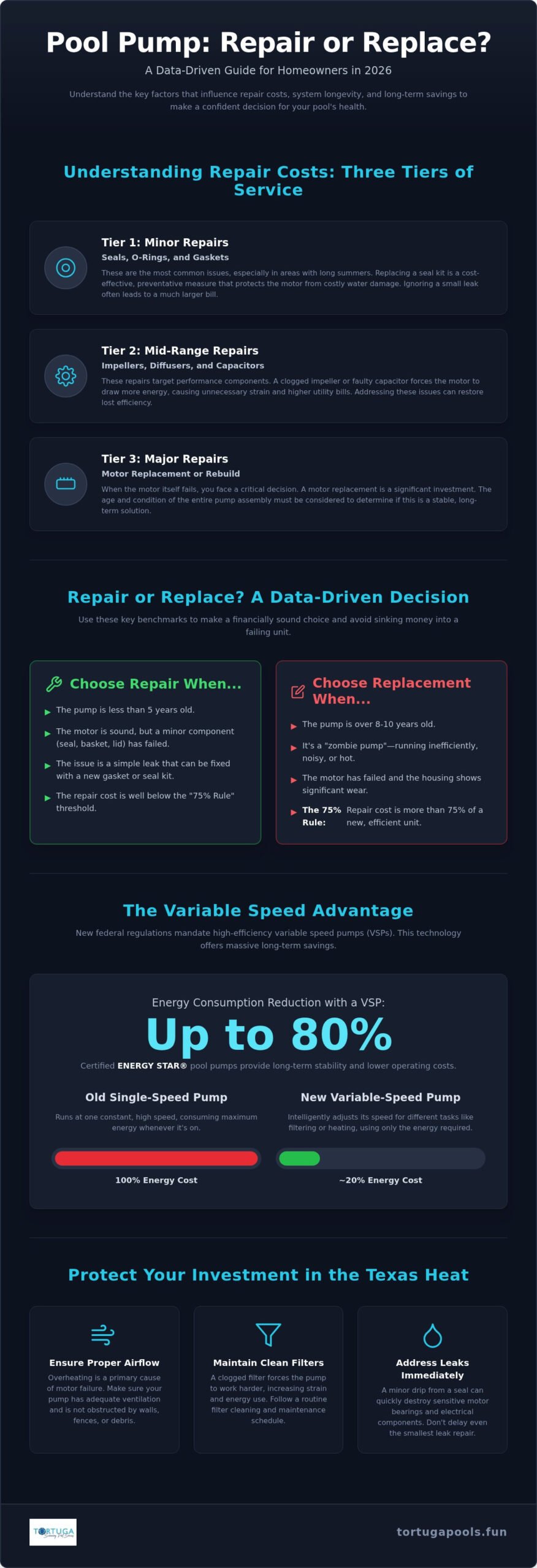
We categorize repairs into three distinct tiers. Minor repairs involve external seals and gaskets. Mid-range repairs target performance components like impellers or capacitors. Major repairs address the motor itself. Understanding which tier your equipment falls into is the first step in evaluating your total pool pump repair cost. Diagnosis is the most critical part of this process. It isn’t just about turning a wrench. A professional diagnosis requires verifying electrical loads, testing for air leaks, and measuring hydraulic pressure. This disciplined approach ensures you aren’t just replacing parts blindly.
Minor Repairs: Seals, O-Rings, and Gaskets
The mechanical seal acts as the primary barrier for your equipment. It keeps water away from the sensitive electrical motor. If you see moisture or salt buildup between the pump housing and the motor, the seal has likely failed. This is a common issue in the Katy area due to the constant operation required during our long summers. Replacing a seal kit is a cost-effective stable solution that acts as insurance for the motor’s longevity. Ignoring a small leak often leads to a much larger bill later. Routine seal replacement keeps the internal environment of your motor dry and functional.
Major Repairs: Motors, Impellers, and Diffusers
Major repairs often involve the motor or the internal impeller. A clogged or broken impeller disrupts the flow and forces the motor to draw more energy. This adds unnecessary strain. When the motor itself fails, you must decide between a replacement motor and a complete new assembly. This decision depends heavily on the age of the housing and the availability of efficient parts. The total cost of ownership for a pump motor represents the sum of the repair expense, the ongoing energy consumption of the unit, and the projected cost of future maintenance over its remaining years of service. If the motor is older than eight years, a simple repair might not provide the long term stability your pool needs. Identifying these issues early prevents a total system collapse during a heatwave.
- Impeller: Responsible for moving the water; prone to clogs from debris.
- Motor: The electrical driver; susceptible to heat damage and bearing failure.
- Diffuser: Works with the impeller to create pressure; can warp over time.
Repair vs. Replace: The Financial Decision Framework
Deciding between fixing a single component or investing in a new system requires a structured approach. We use the 75% Rule to guide this decision. If your estimated pool pump repair cost exceeds 75% of the price for a new, high-efficiency unit, replacement is the more disciplined financial choice. Age is an equally important metric. While a pump might last up to 12 years with methodical care, equipment older than 10 years rarely justifies the expense of a major motor overhaul. The internal wear on the bearings and windings often means a second failure is just around the corner.
Beware of “zombie pumps.” These are units that technically still move water but have lost significant hydraulic efficiency. They often produce excessive heat or a low-frequency hum. These hidden costs accumulate on your monthly utility bill without you noticing. Identifying these signs of a failing pool pump early prevents a complete system failure during the peak of the Texas summer. Opting for ENERGY STAR certified pool pumps provides a pathway to long term stability and lower operating costs. This methodical transition ensures your backyard remains a place of relaxation rather than a source of technical frustration.
When to Choose Repair
Repair is the stable solution when the equipment is under five years old. A simple leak or a worn mechanical seal is a routine maintenance point that doesn’t signal the end of the pump’s life. If the motor remains sound but the housing or basket is damaged, replacing those specific parts is cost-effective. We always emphasize using high-quality gaskets to ensure a stable seal that protects the motor from moisture intrusion. This protective measure extends the lifespan of the most expensive components without requiring a full system replacement.
When Replacement is the Methodical Choice
Replacement becomes necessary when dealing with outdated single-speed motors. Since September 2025, federal regulations have moved the industry toward high-efficiency standards for pumps with a total horsepower of 1.15 or greater. If your pump experiences repeated failures, it often indicates systemic plumbing or electrical issues that a simple repair won’t solve. A professional pool repair near me search can help you find a technician to diagnose the root cause before you invest in new equipment. For a thorough evaluation of your current setup, you can trust a steady hand for your equipment installation.
The Variable Speed Factor: Upfront Cost vs. Long-Term ROI
Variable Speed Pumps (VSPs) utilize permanent magnet motors, similar to the technology found in electric vehicles. This allows the motor to operate at various speeds rather than running at a single, high-intensity output. While the initial investment for a VSP is higher than traditional models, the technology fundamentally changes how you calculate your pool pump repair cost over time. Traditional single-speed pumps are often oversized for routine filtration, wasting energy by moving water faster than necessary. By contrast, a VSP allows for a more disciplined approach to water circulation.
The energy savings are significant. A VSP can reduce your electricity consumption by up to 80% compared to a single-speed model. In the demanding Houston climate, where pumps must run for 8 to 12 hours daily during the summer, these savings translate to hundreds of dollars in annual utility reductions. Beyond the financial metrics, these units provide a sense of quiet confidence. They operate with minimal vibration and noise, even at high speeds. For homeowners in Katy and Fulshear, 2026 utility programs from providers like CenterPoint offer rebates up to $300 for qualifying installations. Combined with the 30% federal tax credit available through the Inflation Reduction Act, the transition to high-efficiency equipment has never been more stable.
Calculating the Payback Period
When comparing a 1.5HP single-speed pump to a modern VSP, the monthly operating costs show a stark contrast. A single-speed pump runs at a fixed, high wattage regardless of the task. A VSP can run at lower speeds for longer durations, which actually improves chemical distribution and filtration quality. Most homeowners find that the energy savings cover the price difference between a repair and a new VSP in under two years. This methodical shift from reactive repairs to proactive efficiency ensures your pool remains a protective asset for your home rather than a drain on your resources.
Automation and Modern Control
Modern VSPs integrate seamlessly with pool automation systems, allowing for precise control over flow rates for water features, cleaners, and heaters. Remote monitoring capabilities enable technicians to catch potential failures before they escalate into emergency repairs. This level of oversight is now the standard for high-quality residential pool maintenance. By choosing a VSP, you invest in a system designed for longevity, stability, and the specific hydraulic needs of your backyard environment. It is a choice that prioritizes long term health over a quick, superficial fix. Homeowners ready to upgrade their entire equipment pad can benefit from reviewing a complete guide to professional swimming pool equipment installation in Katy and Fulshear to understand the 2026 standards and make a fully informed decision.
Texas Heat and Pump Longevity: Preventing Emergency Costs
The Texas climate is unforgiving to pool equipment. In Katy and Fulshear, triple digit temperatures are not just a discomfort; they are the primary cause of premature motor failure. When a motor operates in stagnant, hot air, the internal windings degrade rapidly. This environmental stress significantly increases your long term pool pump repair cost by shortening the equipment lifespan from a potential 12 years down to 5 or 6. Beyond heat, chemical balance plays a vital role in hardware health. Avoid common pool chemical mistakes that lead to internal corrosion, as acidic water can eat through mechanical seals and damage the impeller from the inside out. If you notice your water level dropping unexpectedly, it’s also worth understanding the pool leak detection cost Katy TX homeowners face, since a hidden leak can compound equipment stress and accelerate wear on your pump. Fulshear homeowners dealing with shifting Brazos clay soil should also review what emergency pool repair Fulshear specialists charge for a thorough leak diagnosis before that stress reaches your pump and plumbing.
The Impact of Airflow and Shade
Precision matters when positioning your equipment. Crowded equipment pads are common in newer residential developments, but they trap heat and lead to motor burnout. Providing a ventilated cover or strategic shading can lower the ambient temperature around the motor significantly. You should listen for “bearing scream,” a high pitched metal on metal sound. This is a clear indicator that the motor is overheating and the bearings are seizing. Catching this early allows for a mid range repair rather than a total motor replacement, ensuring your system remains stable throughout the peak season.
Methodical Maintenance Schedules
Consistency is the best defense against sudden equipment failure. A clean skimmer basket and pump basket ensure that the motor doesn’t have to work harder than necessary to pull water. When flow is restricted, the motor works harder and runs hotter. Professional weekly service provides a methodical early warning system. Technicians can spot small leaks or rising temperatures before they turn into emergency situations. In the Houston area, we recommend a professional equipment inspection twice per year to verify electrical draw and hydraulic performance. A thorough seasonal pool opening service each spring is one of the most effective ways to catch winter dormancy issues before they escalate into costly summer repairs.
Use this checklist to monitor your pump health during the summer months:
- Daily: Clear all debris from the skimmer and pump baskets.
- Weekly: Check for moisture or salt crystallization around the motor seal.
- Monthly: Verify there is at least 12 inches of clearance around the motor for proper airflow.
- Seasonal: Schedule a professional filter cleaning to reduce backpressure on the pump.
If your pump is making unusual noises or struggling in the heat, request a methodical equipment repair to protect your investment and ensure your pool stays clear.
Professional Diagnosis in Katy: The Tortuga Pools Approach
At Tortuga Pools, we don’t believe in the “parts cannon” approach where components are replaced based on a gut feeling. A successful resolution begins with a disciplined, step-by-step diagnostic process. We verify electrical loads, test hydraulic pressure, and inspect for minute air leaks that others might overlook. This methodical verification ensures that we identify the root cause of the failure. It allows us to provide a clear picture of your total pool pump repair cost before any work begins. By focusing on accuracy over speed, we protect your property from unnecessary expenses and recurring equipment failures.
Our local expertise in Katy and Fulshear matters because we understand the specific hydraulic demands of residential pools in our area. We aren’t just technicians; we are your neighbors. This sense of neighborly accountability means we fix it right the first time. We live where we work, and we treat every equipment pad with the same diligence we would apply to our own homes. When you choose a local specialist, you benefit from a steady hand that prioritizes long term stability over a quick, superficial fix. Scheduling a methodical evaluation is the first step toward securing your pool’s health for the coming seasons. If your diagnosis reveals that a full pad upgrade is the right path forward, our guide to swimming pool equipment installation in Katy and Fulshear walks you through every hardware decision you’ll need to make.
What to Expect During a Repair Visit
Transparency is the foundation of our service. During a visit, you can expect a clear breakdown of parts sourcing and labor expectations, providing a realistic view of your pool pump repair cost. Our methodical craftsmen communicate directly with you, explaining the technical reasons behind every recommendation. We distinguish between an “emergency patch,” which often leads to more trouble later, and a “stable solution” designed for endurance. This industrious approach ensures you aren’t left guessing about the state of your filtration system. Every measurement is verified, and every seal is tested to meet our high standards of professional reassurance.
Securing Your Pool for the Long Term
A repair is often just one part of a broader strategy for equipment longevity. Combining a professional repair with a weekly pool maintenance plan provides the ultimate protection for your investment. This proactive stewardship allows us to monitor your pump’s performance throughout the year, catching minor issues before they escalate into major failures. It offers the peace of mind that comes from knowing a protective steward is looking after your home and family. Don’t leave your equipment health to chance. Schedule your methodical pump diagnosis with Tortuga Pools today to ensure your system runs consistently and efficiently.
Securing Your Backyard Investment for the Future
Managing your pool pump repair cost doesn’t have to be a source of stress or guesswork. By following a structured decision framework, you can distinguish between a minor seal replacement and a necessary upgrade to high-efficiency technology. The intense Katy heat demands equipment that can handle long operating hours without sacrificing stability. A methodical diagnosis is the only way to ensure you’re making a choice that protects your home and your budget for years to come.
As a locally owned and operated business in Katy, TX, we act as protective stewards for our neighbors’ properties. Our expertise in high-efficiency Variable Speed Pump installation helps you navigate modern energy regulations while lowering your monthly bills. We use a step-by-step diagnostic approach to verify exactly what your system needs before any work begins. This disciplined philosophy ensures your pool remains a place of relaxation and safety. Get a Methodical Pump Diagnosis from Tortuga Pools today and enjoy the peace of mind that comes from a job done correctly the first time. Your pool is in steady hands.
Frequently Asked Questions
How much does it typically cost to replace a pool pump motor in 2026?
While industry averages for a replacement motor in 2026 range from $200 to $800, the final pool pump repair cost depends on the specific horsepower and efficiency rating of your unit. High-performance motors often sit at the higher end of that spectrum. This expense usually covers the hardware and the necessary seal kits required to protect the new motor. Professional installation ensures the electrical connections and hydraulic seals meet verified safety standards for long term stability.
Is it cheaper to repair or replace a pool pump?
Repair is often the more cost-effective choice for equipment under five years old with minor issues like a failed seal or capacitor. However, we recommend the 75% Rule: if the estimated pool pump repair cost exceeds 75% of the price for a new unit, replacement is the more disciplined financial decision. Older single-speed pumps are rarely worth major motor repairs because they lack the energy efficiency of modern variable speed models, which provide better long term ROI.
How long should a pool pump last in the Texas heat?
A high-quality pool pump typically lasts between 8 and 12 years in the Houston area. The intense Texas heat and longer operating seasons put significant stress on the motor windings and bearings compared to cooler climates. Methodical maintenance, such as regular filter cleaning and ensuring proper airflow around the equipment pad, can help you reach the upper end of that lifespan. Neglecting these small tasks often leads to premature failure during peak summer months.
Can I replace my pool pump motor myself to save on labor costs?
While some homeowners attempt DIY motor swaps, the process involves complex electrical wiring and high-pressure hydraulic sealing. Mistakes can lead to motor burnout or dangerous electrical shorts. A professional diagnosis ensures the root cause of the failure is identified, preventing you from spending money on a new motor when the issue might be a simple blockage or electrical fault. Professional service provides the reassurance that your property and family remain safe and secure.
Why is my pool pump making a loud grinding noise?
A loud grinding or screaming sound usually indicates that the internal bearings have failed. This often happens when a mechanical seal leaks, allowing water to enter the front of the motor housing. In the Katy heat, these bearings can seize quickly once the lubrication is compromised. Catching this “bearing scream” early might allow for a mid-range repair, but ignoring it will eventually lead to a total motor failure that requires a full system replacement.
What are the benefits of upgrading to a variable speed pump?
Upgrading to a variable speed pump can reduce your pool’s energy consumption by up to 80% compared to traditional single-speed models. These pumps operate with quiet confidence, producing significantly less noise and vibration. Beyond the monthly utility savings, 2026 federal tax credits and local utility rebates in the Houston area can offset the initial investment. Since September 2025, these high-efficiency units are the industry standard for most residential pool applications and equipment installations.
How much does labor usually cost for a pool pump repair in Katy, TX?
Labor rates for equipment repair in the Katy and Fulshear area vary based on the complexity of the diagnosis and the specific components involved. A professional technician doesn’t just turn a wrench; they verify the entire system’s hydraulic health and electrical integrity. This methodical approach ensures the repair is a stable solution rather than a temporary patch. Investing in professional expertise prevents the “parts cannon” approach and ensures the job is done correctly the first time.
Does a leaking pump always need to be replaced?
No, a leaking pump often only requires a new mechanical seal or a set of fresh O-rings. These minor repairs are a cost-effective way to prevent water from reaching the motor, which is the most expensive part of the system. If you notice moisture between the pump housing and the motor, addressing it immediately is a protective measure for your equipment. Replacement is only necessary if the housing is cracked or the motor has already sustained internal water damage. If you suspect water loss is coming from elsewhere in your pool system, reviewing what pool leak detection cost Katy TX professionals charge can help you budget for a thorough diagnosis before the problem affects your home’s foundation.