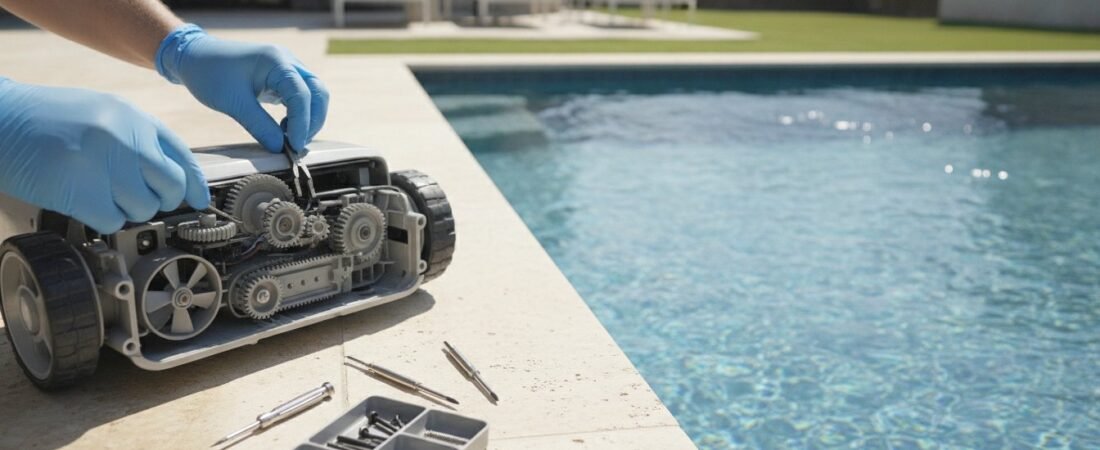
What if the “dead” pool cleaner sitting at the bottom of your deep end doesn’t actually need to be replaced? It’s a common frustration for many local homeowners, especially when a layer of silt begins to settle on the plaster during our humid summer months. You invested in technology to reclaim your weekends, so seeing that equipment motionless is a major setback. For those seeking automatic pool cleaner repair Houston residents can rely on, the solution starts with a steady hand and a disciplined diagnostic process rather than a rushed trip to the store.
We understand that your pool is a protective measure for your home and a sanctuary for your family. This guide provides a clear, methodical plan to identify why your cleaner stopped moving and determine the most cost-effective repair path. We’ll strip away the confusing technical jargon and look at the actual mechanics of your unit. You’ll learn how to verify failure points with precision, ensuring your pool stays clear without the need for manual vacuuming. We’ve designed this overview to give you a professional’s perspective on restoring your equipment’s longevity for the 2026 season.
Key Takeaways
- Master a disciplined diagnostic framework to isolate plumbing issues from mechanical failures before purchasing expensive replacement parts.
- Understand how the intense Houston climate and humidity cycles accelerate the degradation of plastic components and internal seals.
- Apply the 50% Rule to evaluate whether a repair offers a stable return on investment or if a full unit replacement is the more protective path.
- Secure professional automatic pool cleaner repair Houston expertise to ensure every component is tested and verified with methodical precision.
- Identify simple obstructions in the turbine or impeller that you can clear in minutes to restore your pool’s health and climbing ability.
Common Causes of Automatic Pool Cleaner Failure in Houston
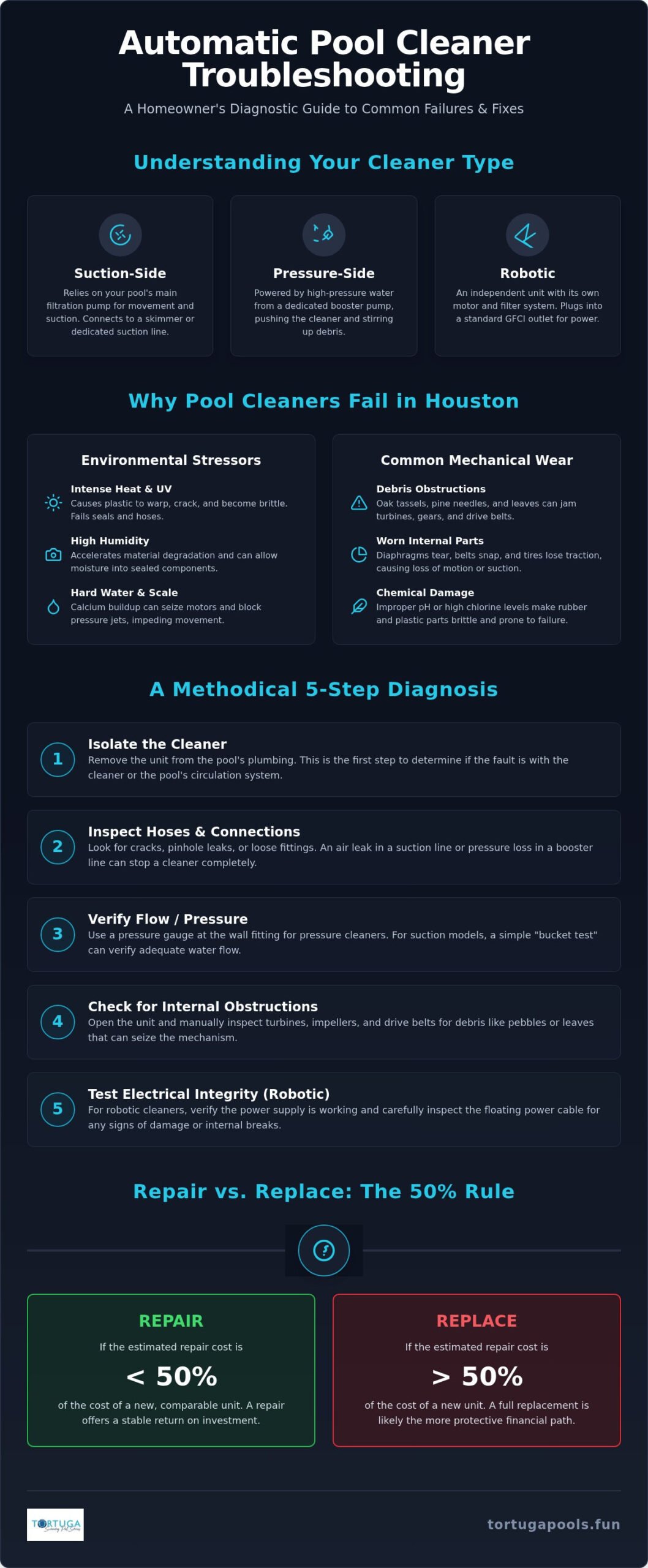
To understand why your equipment failed, you must first identify the specific mechanics of your unit. Most local backyards utilize one of three different types of automatic pool cleaners: suction-side, pressure-side, or robotic. Suction units rely on your pool’s filtration pump. Pressure units use a dedicated booster pump. Robotics operate independently with an internal motor and power cord. Each system has unique failure points, but they all share a common enemy: the volatile Southeast Texas environment.
Houston’s high humidity and intense heat cycles are particularly destructive to pool equipment. On a typical July afternoon, the surface temperature of your pool deck can exceed 140 degrees. This heat causes plastic housings to expand and contract rapidly. Over time, this stress leads to warped seals and hairline fractures in the cleaner’s body. When these seals fail, water enters protected motor compartments or creates pressure leaks that render the unit motionless. This environmental degradation is a primary reason homeowners eventually require professional automatic pool cleaner repair Houston services to restore their system’s integrity.
Debris also plays a significant role in mechanical failure. Unlike other regions, Houston pools face a seasonal barrage of oak tassels, pine needles, and heavy organic matter. These materials are notorious for wrapping around internal gears and drive shafts. A single oak tassel can jam a turbine or snap a small plastic belt. Furthermore, chemical imbalances often accelerate this wear. If your pH levels fluctuate or chlorine remains excessively high, rubber diaphragms and hoses become brittle. They lose the flexibility needed to pulse or climb, leading to a cleaner that simply circles the drain.
Environmental Stressors in Katy and Fulshear
The geography of the Gulf Coast introduces specific challenges like fine silt. After a heavy storm, this microscopic grit enters the pool and acts like sandpaper inside your cleaner’s internal movements. It grinds down bearings and clogs the delicate filters found in robotic units. High UV exposure also bleaches and cracks hoses within just a few seasons. Additionally, the local hard water in areas like Katy contributes to calcium scale buildup. This scale can seize robotic motors or block the small orifices in pressure-side nozzles, requiring a disciplined, step-by-step cleaning to resolve.
Mechanical Wear Patterns
Identifying wear patterns early can prevent a total system collapse. On robotic units, look for smoothed-out tires or tracks that have lost their “teeth.” These parts are essential for the unit to gain traction on plaster or tile. In suction cleaners, a flattened or torn diaphragm is the most common culprit for a loss of suction. You’ll notice the unit “stuttering” or failing to move even when the pump is at full speed. For pressure-side cleaners, check the tail-sweep. If the foam scrubber is gone or the wear-rings are thin, the unit will fail to agitate debris effectively, leaving your pool floor dirty despite the cleaner being active.
A Methodical Diagnosis Framework for Pool Cleaners
A disciplined diagnostic process is the only way to avoid the trap of “part swapping,” where homeowners spend hundreds on components without ever fixing the root cause. When approaching automatic pool cleaner repair Houston, we utilize a step-by-step verification system. This ensures that every mechanical and hydraulic variable is accounted for before a single screw is turned. It’s a steady hand approach that prioritizes facts over guesswork.
- Step 1: Isolate the cleaner. Remove the unit from the pool plumbing. This determines if the failure is inside the cleaner or within the pool’s circulation system.
- Step 2: Inspect hoses and connections. Look for air leaks in suction hoses or pressure drops in booster lines. In the Houston heat, even a pinhole leak can stall a unit.
- Step 3: Perform a “bucket test.” For suction cleaners, place the hose end in a bucket of water to verify the flow rate. For pressure units, use a pressure gauge at the wall fitting.
- Step 4: Check internal turbines and drive belts. Open the access hatch to inspect for obstructions like oak tassels or pebbles that seize internal movements.
- Step 5: Test electrical integrity. For robotic models, verify the power supply output and inspect the floating cable for internal breaks.
Isolating Suction and Pressure Issues
Often, what looks like a broken cleaner is actually a plumbing failure. You must verify if your pool pump repair Katy TX needs are the true culprit. If the main pump isn’t providing adequate vacuum or the booster pump isn’t reaching full pressure, the cleaner will remain stationary. Check the wall fitting for a secure seal and ensure the backup valve isn’t stuck in the “open” position, which bleeds off necessary pressure. Following standards from the Pool & Hot Tub Alliance, we measure the wheel RPMs on pressure-side cleaners to ensure they fall within the manufacturer’s specified range for optimal performance.
Robotic Cleaner Electrical Troubleshooting
Robotic units require a different level of technical precision. If your unit is “short-cycling” (starting for a few seconds then stopping), the issue is likely electrical. We use a multimeter to verify that the power supply is delivering the correct voltage to the floating cable. It’s also vital to inspect the cable for “kinking,” which can snap internal copper filaments over time. If your diagnosis indicates a deeper motor block failure, it may be time to seek professional equipment repair to protect your investment from further damage.
The Repair vs. Replace Decision: Evaluating Longevity
Determining the most cost-effective path for your equipment requires a cold, analytical look at the numbers. At Tortuga Pools, we utilize the “50% Rule” as a standard benchmark for equipment health. If the quote for an automatic pool cleaner repair Houston homeowners receive approaches half the price of a brand-new unit, the investment stability is compromised. A repair shouldn’t be a gamble. It should be a calculated measure to extend the life of a fundamentally sound machine.
Age is the second critical variable in this equation. Suction-side cleaners often provide reliable service for five to seven years. Pressure-side units, with their robust mechanical gears, can endure eight to ten years with meticulous care. However, robotic models typically average a four to six-year lifespan because their internal electronics are more susceptible to the Houston heat. If your unit is approaching the end of these windows, a major repair might only be a temporary fix for a system nearing total mechanical fatigue.
Cost Comparison Matrix
The following table provides a general framework for evaluating common repair scenarios against the stability of a new installation. We also recommend verifying the warranty status of your existing equipment; many 2026 manufacturer terms for high-end units offer extended coverage that might offset these costs. Additionally, consider the hidden cost of weekly pool maintenance Katy TX if a failing cleaner forces you to spend hours manual vacuuming every Saturday morning.
| Component Failure | Repair Logic | Replacement Logic |
|---|---|---|
| Robotic Motor Block | High cost; only viable if the unit is under two years old. | Recommended if the unit is out of warranty. |
| Suction Diaphragm | Low cost; a routine maintenance item for all ages. | Rarely justifies a full unit replacement. |
| Pressure Feed Hose | Moderate cost; worth fixing if the internal gears are sound. | Consider replacement if the booster pump is also failing. |
Technological Obsolescence
Sometimes, a repair is merely a “band-aid” for a fundamentally outdated design. Older mechanical cleaners often struggle with the fine silt and microscopic debris common in the Gulf Coast region. Choosing a professional swimming pool equipment installation allows you to access modern efficiency. The latest 2026 robotic models offer superior filtration systems specifically engineered to trap the fine particles that older suction units simply bypass. Moving to a modern unit can also reduce the load on your primary filtration system, protecting your main pump’s longevity while ensuring a pristine swim environment.
Common DIY Fixes and When to Seek Professional Expertise
A motionless cleaner doesn’t always signal a total system failure. Often, a methodical five-minute inspection can resolve the issue without a service call. For many homeowners, the first step in automatic pool cleaner repair Houston is checking the turbine or impeller for physical obstructions. Houston’s seasonal debris, particularly oak tassels and small pebbles, frequently jam these internal components. By opening the access hatch and clearing these materials, you can often restore full functionality immediately. It’s a simple, disciplined check that saves time and prevents unnecessary stress.
Traction is another area where DIY maintenance is effective. If your unit is moving but fails to climb the walls, inspect the tires and tracks. In our local climate, rubber components can smooth out or become “gummy” over time. Replacing these wear items is a straightforward task that restores the unit’s ability to navigate the pool’s deep end. For robotic models, ensure the floating cable is untangled and stored flat. A coiled cable develops “memory” that restricts the unit’s range, leading to missed spots and inefficient cleaning cycles.
Safety remains the highest priority during any maintenance task. While clearing a turbine is safe, you should never attempt to open a motor block or disassemble high-voltage components. These parts are factory-sealed to remain watertight. Breaking these seals can lead to catastrophic electrical failure or safety hazards. If your diagnosis moves beyond external parts into the internal electronics, it’s time to stop and consult a professional.
Homeowner Maintenance Tasks
Longevity is built through consistent, protective care. Proper storage is essential; never leave suction or pressure hoses coiled tightly in the sun, as the heat will bake in kinks that are nearly impossible to remove. Regular cleaning of debris bags and filters is also vital. A full bag creates unnecessary backpressure, which strains the internal gears and shortens the motor’s lifespan. Finally, maintain your water chemistry. Corrosive water or high chlorine levels accelerate the degradation of rubber diaphragms and seals, leading to premature leaks.
When Professional Intervention is Mandatory
Certain failures require the steady hand of a technical expert. Internal motor seal failures in robotic units are particularly complex; they require specialized pressure testing to ensure the repair is stable. Complex gearboxes and internal drive systems also demand precision that goes beyond standard DIY tools. When evaluating these deeper issues, it’s helpful to calibrate the pool pump repair cost against the cleaner’s remaining lifespan. If your equipment requires specialized technical work to return to peak performance, we invite you to schedule a professional equipment repair to ensure the job is done correctly the first time.
Methodical Repair Services from Tortuga Pools in Houston
At Tortuga Pools, we don’t believe in “good enough.” Every automatic pool cleaner repair Houston residents trust us with is treated as a technical restoration. We understand that your pool is a protective measure for your home and a sanctuary for your family. Our family-owned business serves Katy, Fulshear, and the greater Houston area with a level of neighborly accountability that national chains cannot match. We don’t guess. We verify. Our technicians utilize specialized diagnostic tools to measure pressure, suction, and electrical output. This ensures that the repair plan we propose is grounded in objective data rather than estimation.
Our expertise spans the entire spectrum of pool technology. We are equally comfortable disassembling a traditional mechanical unit as we are troubleshooting the complex circuitry of 2026 robotic models. This breadth of knowledge allows us to integrate repairs with a comprehensive assessment of your pool’s overall health. We look for the root cause of every failure. If a pump is cavitating or a filter is bypassed, we identify those issues before they destroy your newly repaired cleaner. It’s a steady hand approach that prioritizes long-term stability over a quick, superficial fix.
The Tortuga Pools Difference
We treat your property with the same diligence we apply to our own. This protective stewardship is the core of our philosophy. While many companies focus on the fastest possible fix to move to the next job, we prioritize longevity. We look beyond the immediate failure point to assess the health of the entire system. Often, a cleaner failure is a symptom of a larger filtration issue that needs a disciplined resolution. By integrating our weekly service with our technical repair expertise, we help homeowners catch small wear patterns before they turn into catastrophic equipment losses. It’s a methodical philosophy designed for the long-term health of your backyard investment.
Schedule Your Diagnostic Visit
When you book a consultation with us, you can expect a transparent, unhurried evaluation. We provide clear, declarative findings and set realistic expectations for your equipment’s future. Our goal is to provide a methodical repair solution that restores your peace of mind and keeps your pool floor pristine. We avoid high-pressure sales tactics, opting instead for professional reassurance based on facts. Don’t settle for a “band-aid” fix that leaves you manual vacuuming again in a month. Contact Tortuga Pools today to ensure your pool equipment receives the meticulous care it deserves.
Restoring Your Pool’s Longevity for the 2026 Season
A motionless pool cleaner is a disruption to the stability of your home sanctuary. By applying a disciplined diagnostic framework, you can move past the frustration of a dirty pool and identify the exact failure point. Whether it’s clearing a simple obstruction or evaluating a complex motor block failure, the goal is always to protect your investment with meticulous care. Understanding the 50 percent rule and the impact of the Houston climate helps you make a stable, calculated decision for your equipment’s future.
Securing professional automatic pool cleaner repair Houston ensures that every component is verified against professional standards. Tortuga Pools is a family-owned and locally operated business dedicated to this methodical approach. We are specialists in 2026 pool technology and maintain a disciplined, step-by-step repair philosophy that eliminates guesswork. We treat your property with the same diligence we apply to our own; providing a steady hand through every technical maintenance challenge.
Don’t let equipment failure steal your weekends or compromise your pool’s health. Schedule a Methodical Equipment Diagnosis with Tortuga Pools today to restore your system. We are here to guide you toward a clean pool and a reliable repair path.
Frequently Asked Questions
Why is my pool cleaner moving slowly or getting stuck in corners?
Slow movement or corner entrapment often indicates a drop in water pressure or suction. For suction cleaners, check for a clogged pump basket or filter. For pressure-side units, verify the backup valve isn’t stuck. In Katy and Fulshear, oak tassels often jam internal turbines. If the unit is moving but remains stuck, the tires might be worn smooth, losing the traction needed to climb out of corners.
How often should I replace the tracks or tires on my robotic cleaner?
Most robotic cleaner tracks and tires require replacement every one to three years. In our intense Houston climate, the rubber degrades faster due to high UV exposure and chemical contact. You should inspect the treads monthly for smoothed-out patterns or gummy textures. Replacing these wear items is a vital part of automatic pool cleaner repair Houston homeowners can perform to maintain optimal wall-climbing performance and coverage.
Can I leave my automatic pool cleaner in the pool all the time?
While it is convenient, leaving your cleaner in the water 24/7 accelerates the breakdown of internal seals and plastic housings. High chlorine levels and Houston’s heat cycles make rubber components brittle. We recommend removing the unit after its cleaning cycle is complete and storing it in a shaded area. This simple habit protects your equipment’s longevity and prevents the hose from developing permanent kinks or memory loops.
Is it worth repairing a pool cleaner that is more than 5 years old?
The decision depends on the specific failure point and the unit type. We utilize the 50 percent rule; if the repair cost exceeds half the price of a new 2026 model, replacement is usually more stable. Simple mechanical suction cleaners are often worth fixing at year five. However, for older robotic units with motor block failures, the investment in a new, more energy-efficient system often provides better long-term value for Houston pools.
Why does my pressure-side cleaner tail spray water out of the pool?
A tail-spray issue usually stems from a missing foam scrubber or an improperly adjusted sweep hose. If the foam tip is worn away, the tail will whip violently and spray water onto your deck or windows. You can resolve this by replacing the scrubber or adjusting the flow screw located on the back of the cleaner. This ensures the tail remains submerged while still agitating debris on the pool floor.
How do I know if my pool cleaner hose has a suction leak?
You can identify a suction leak by looking for air bubbles returning through the pool jets or hearing a hissing sound at the hose joints. If the hose floats or the cleaner stutters during movement, it’s likely sucking air. A methodical way to verify this is to submerge each hose section individually while the pump is running. If you see air entering the system at a specific connection, that segment needs replacement.
What is the average lifespan of a robotic pool cleaner in Houston?
In the demanding Southeast Texas environment, a high-quality robotic cleaner typically lasts four to six years. The combination of high humidity and heat cycles puts significant stress on the internal motor blocks and electronics. Regular maintenance, such as filter cleaning and proper storage, can extend this window. When the unit reaches this age, seeking professional automatic pool cleaner repair Houston services helps determine if the internal components remain watertight and safe.
Does my pool cleaner need a separate booster pump to function?
Only pressure-side cleaners require a dedicated booster pump to operate. These pumps provide the high-pressure water flow needed to drive the internal gears and the venturi suction. Suction-side cleaners and robotic models do not need this extra equipment. If you are installing a new system in Katy or Fulshear, choosing a robotic unit can eliminate the need for a booster pump entirely, reducing your monthly electricity consumption and simplifying your equipment pad.