
Imagine it’s Friday afternoon in Katy, and you’re looking forward to a quiet weekend by the water. Then, a typical Texas thunderstorm rolls through, leaving your pool a cloudy, debris-filled mess. For many, this marks the start of a familiar cycle: hours of scrubbing, skimming, and second-guessing chemical levels. You shouldn’t have to choose between a clean swim and your limited free time. Effective pool maintenance for busy homeowners isn’t about working harder; it’s about working smarter. We understand the frustration of losing your Saturday to a chore that never feels finished.
You can maintain a crystal-clear pool in the intense Texas heat without sacrificing your entire weekend to manual labor. This guide reveals how methodical systems and modern automation protect your expensive equipment while ensuring a swimmable, blue oasis for your family. We’ll explore the disciplined steps required to manage local humidity challenges and the technical precision needed for perfect chemical balancing. From AI-driven management to the steady hand of professional care, you’ll discover how to reclaim your time and finally enjoy your investment.
Key Takeaways
- Learn how to bridge the gap between casual skimming and professional-grade care by addressing the specific humidity challenges of the Katy climate.
- Implement the 80/20 rule of pool maintenance for busy homeowners to prevent 90% of equipment failures through high-impact visual inspections.
- Explore how smart automation and robotic cleaners can transition your pool from a manual weekend chore to a self-managing system.
- Establish a methodical recovery protocol for Texas thunderstorms and freezes to ensure your water remains blue and your equipment stays protected.
- Evaluate the true cost of DIY upkeep versus managed weekly service to prioritize your family’s safety and your own quality time.
Why Traditional Pool Maintenance Fails Busy Katy Homeowners
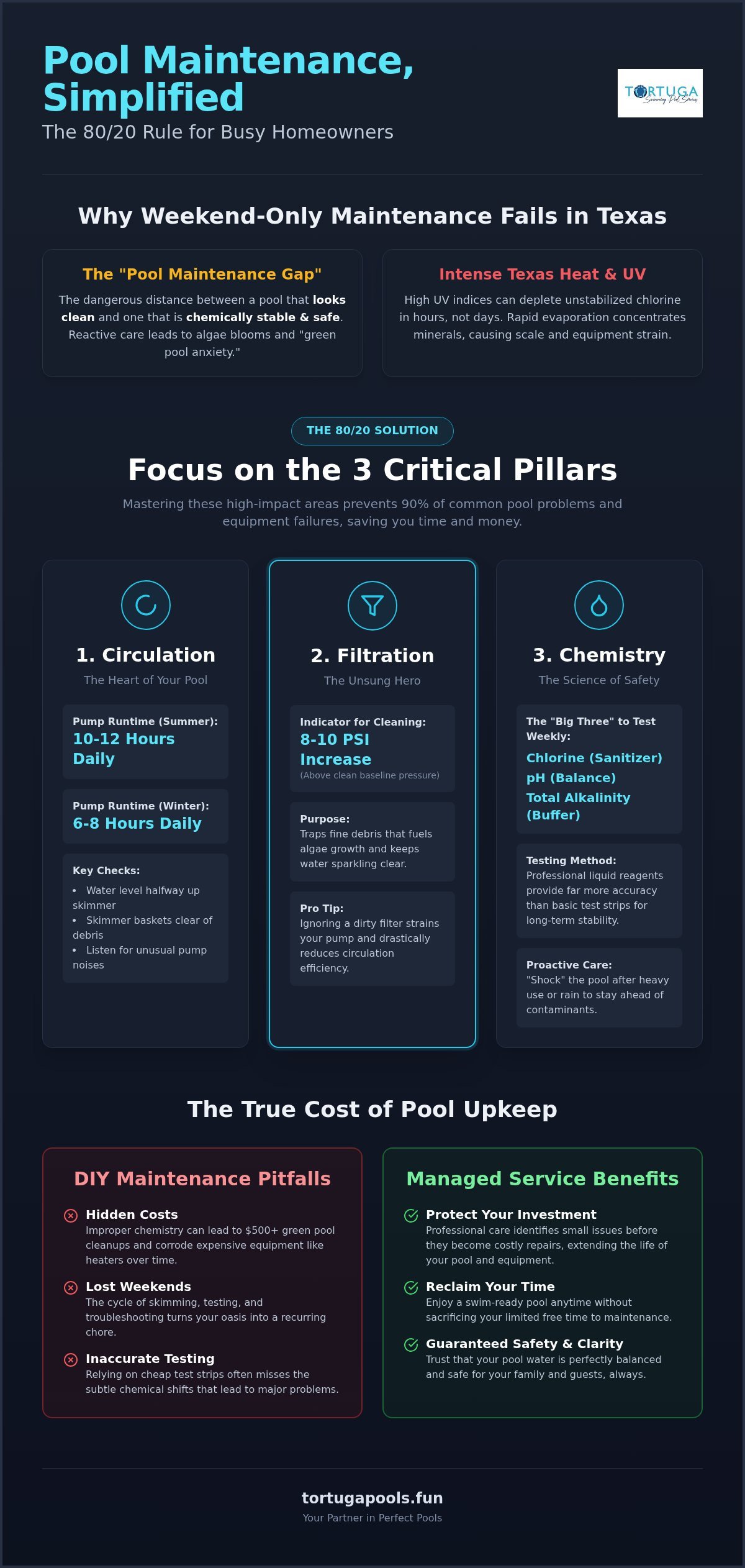
Many residents fall into what we call the “Pool Maintenance Gap.” This is the distance between a pool that merely looks clean and one that is chemically stable and safe for your family. For most, upkeep consists of a quick skim and a few chlorine tablets on a Saturday morning. This reactive cycle fails because it ignores the microscopic shifts happening beneath the surface. In our region, a pool is a living ecosystem. It reacts to every spike in humidity and every degree of heat with predictable volatility.
Relying on weekend-only care often leads to expensive mid-week algae blooms. By the time you notice a slight cloudiness on Friday evening, the chemistry has likely been failing for several days. Proper pool maintenance for busy homeowners requires a shift from a chore-based mindset to a systems-based approach. When your backyard feels like a burden rather than an oasis, the psychological toll of “green pool anxiety” can ruin your limited time off. True relaxation only comes when you trust the stability of your water.
The Impact of the Texas Heat on Water Chemistry
High UV indices in Houston deplete chlorine in hours rather than days. On a typical 100-degree afternoon, unstabilized chlorine can be neutralized by sunlight with startling speed. At the same time, rapid evaporation causes calcium hardness to climb, leaving stubborn scale on your tile and inside your plumbing. Many homeowners assume their salt systems are automatic, but these units often struggle to maintain baseline levels during a brutal Texas July. Understanding professional pool sanitation methods helps prevent these seasonal crashes before they start.
The Hidden Costs of DIY Maintenance Mistakes
The financial risks of DIY care are often hidden until a major repair is needed. Improper pH balance can corrode expensive heater elements over time, leading to premature equipment failure. In the heavy clay soil of Katy, slow leaks can develop that are nearly impossible for a homeowner to detect without specialized equipment. Attempting to save money on bargain-bin chemicals usually results in a $500 green pool cleanup when those products fail to provide the necessary stability. A methodical approach identifies these issues while they are still small, protecting your investment for the long term.
The 80/20 Rule: High-Impact Tasks for Minimal Time
Effective pool maintenance for busy homeowners doesn’t require a chemistry degree or hours of manual labor. It requires a disciplined focus on the “Critical Pillars”: Circulation, Filtration, and Chemistry. By applying the 80/20 rule, you can achieve professional-grade results by spending just a few minutes each week on high-impact tasks. A simple 60-second visual inspection often prevents 90% of catastrophic equipment failures. Check the pump for unusual noises. Verify the water level is halfway up the skimmer mouth. In wooded areas like Fulshear and Katy, an overlooked skimmer basket can starve your pump of water in a single afternoon. Clean baskets ensure the steady flow your system requires. Precision in these small moments protects your long-term investment.
Circulation and Filtration Essentials
Your pump is the heart of the system. During a Houston summer, your water needs to move. We recommend running your pump for at least 10 to 12 hours daily to combat the intense heat. In cooler months, you can often scale back to 6 or 8 hours. The pool filter is the unsung hero here, trapping fine debris that would otherwise fuel algae growth. Keep a close eye on your pressure gauge. When the reading rises 8 to 10 PSI above your clean baseline, it indicates a need for a professional filter cleaning to maintain efficiency. Don’t ignore the main drain at the bottom of the pool. It ensures bottom-to-top water movement, preventing stagnant pockets where bacteria thrive.
Streamlined Chemical Testing
Precision matters when testing your water. While basic test strips are convenient for a quick check, they often lack the accuracy needed for long-term stability. Professional liquid reagents provide the verification necessary to get your levels “just right.” Focus your efforts on the “Big Three”: Chlorine, pH, and Total Alkalinity. Maintaining these levels according to CDC guidelines for pool operation ensures a safe environment for your family. Don’t wait for the water to turn cloudy to take action. Proactive “shocking” after a heavy bather load or a light rain keeps the sanitizer levels ahead of the curve. This disciplined approach prevents the reactive, expensive cleanups that drain your weekend. For a deeper look at the precise chemical standards and step-by-step routines required in our local climate, the weekly pool maintenance Katy TX homeowner guide outlines exactly what your water needs to stay safe and clear year-round.
Leveraging Technology: Automating Your Maintenance
Technology shifts the burden of care from your hands to a disciplined system. For pool maintenance for busy homeowners, automation isn’t a luxury; it’s a protective measure for your property. Variable speed pumps serve as the foundation of this approach. January 2026 data shows these pumps can reduce energy consumption by up to 85% compared to older single-speed models. This efficiency allows the pump to run longer at lower speeds, providing superior filtration without a high utility cost. It’s a methodical way to keep water moving through the Houston heat.
Automatic pool cleaners act as a 24/7 maintenance crew. Robotic models are particularly effective because they operate independently of your main pump and filter. These devices use AI-based navigation and dirt detection to ensure every corner is addressed. By removing debris before it breaks down, these cleaners reduce the workload on your filter. Salt-water chlorine generators add another layer of stability. They provide a “steady hand” by delivering a consistent flow of sanitizer, avoiding the chemical spikes and dips common with manual dosing. This consistency is vital for maintaining Pool Safely standards and ensuring a healthy swimming environment.
Smart Systems for the Modern Home
Modern smart controllers allow you to manage your backyard from your office in downtown Houston or your home in Fulshear. You can monitor chemical alerts, adjust pump schedules, and even activate the heater via a smartphone app. This level of control ensures your pool is ready for use the moment you arrive home. Integrating your lighting and water features into a single interface simplifies entertaining. You no longer need to manually toggle switches or guess if the system is running correctly. The data is always at your fingertips.
The ROI of Equipment Upgrades
The return on investment for automation is significant. Homeowners report reducing their pool-related utility bills by 30% to 50% after upgrading to modern systems. These savings often pay for the equipment over a few seasons. Beyond the finances, you save approximately two to three hours of manual labor every week. Precision automation also reduces the frequency of emergency repairs. By keeping water chemistry stable, you prevent the corrosive damage that typically destroys heaters and seals. You’re investing in the longevity of your equipment and the quality of your free time.
Managing Seasonal Shifts and Texas Storm Recovery
In the Southern United States, pool maintenance for busy homeowners is a year-round commitment. We don’t have the luxury of a hard winter closing like our neighbors in the North. Instead, we manage a shifting environment that requires different tactics for each season. Spring in Katy brings a deluge of oak tassels and pine needles. These organics are your pool’s worst enemy. They clog skimmer baskets and break down into tannins that can leave permanent stains on your plaster. Fall and winter bring sudden temperature drops that require a change in equipment strategy rather than a complete shutdown. Consistency remains the only way to avoid a total system failure.
Post-Storm Recovery Protocol
A heavy Katy thunderstorm can dump several inches of rain in a single hour. This water is often acidic and filled with nitrates that fuel algae growth. Following a methodical recovery protocol prevents a mid-week water crash.
- Step 1: Clear large debris immediately. Leaves and branches sitting on the bottom will leave brown marks if left for more than 24 hours.
- Step 2: Check the pump for air locks. High winds often blow debris past the skimmer, which can clog the impeller and starve the motor of water.
- Step 3: Re-balance the chemistry. Heavy rainfall dilutes your salt and chlorine levels significantly. If your water has already turned, you may need a professional green pool and algae cleanup to restore safety and clarity.
Winter Upkeep for Year-Round Pools
When water temperatures drop below 60 degrees, algae growth slows down, but equipment risks actually increase. Your pump’s “Freeze Protection” setting is non-negotiable. It ensures water keeps moving to prevent pipes from bursting during a rare Houston cold snap. Even in winter, chemistry still matters. You must adjust your saturation index to prevent the water from becoming “aggressive” and pulling calcium out of your plaster. As the season ends, schedule a professional filter deep-clean. This ensures your system is ready for the intense demand of a Texas July. A disciplined, step-by-step philosophy prioritizes the long-term health of your backyard oasis.
The Case for Managed Maintenance: From DIY to Done
Many homeowners begin their journey with the belief that a few hours of study can replace years of technical field experience. This is a common misconception. Professional pool maintenance for busy homeowners provides a level of verification that DIY testing simply cannot match. While you might save on immediate labor costs, the long-term financial risk of missing a slow leak or an imbalanced saturation index remains high. A professional acts as a protective steward for your property, ensuring that your backyard remains a place of relaxation rather than a source of hidden stress.
The true cost of DIY upkeep often exceeds the price of a professional service when you account for the “hidden” variables. Texas residential pool owners face unique regional challenges that demand high-quality supplies. Current 2026 data indicates that monthly chemical expenses alone range from $50 to $125. When you factor in the cost of professional liquid reagents, specialized cleaning tools, and the value of your own weekend hours, the investment in managed care becomes a logical choice. Before committing to any service plan, it’s worth understanding the weekly pool service cost Katy homeowners should expect in 2026 so you can budget accurately and avoid hidden surcharges. A steady hand at the helm ensures your pool is always swimmable and ready for a spontaneous BBQ without a frantic trip to the chemical store.
What to Expect from a Professional Weekly Service
A professional service delivers meticulous chemical balancing that goes far beyond the basic readings of a test strip. We monitor the relationship between pH, alkalinity, and calcium hardness to ensure the water is neither corrosive nor scale-forming. This precision protects your family’s skin and eyes from irritation. Our technicians also serve as an “Early Warning System.” We are trained to spot vibrating motors, small drips, or pressure fluctuations before they become midnight emergencies. This proactive equipment diagnosis extends the life of your pump and heater, saving you from premature replacement costs.
Choosing a Reliable Partner in Katy
Accountability is the foundation of a successful partnership. Local, family-owned businesses in the Katy and Houston area offer a level of neighborly responsibility that national chains often lack. When choosing a provider, ask about their specific testing methods and their protocol for documenting water chemistry. You deserve a partner who treats your pool with the same diligence they would their own. To understand exactly what professional standards and accountability look like in practice, reviewing what separates the reliable pool cleaners Katy TX homeowners trust can help you ask the right questions before signing any service agreement. Our goal is to transition your backyard into a consistently blue, worry-free oasis. Let Tortuga Pools handle the hard work so you can enjoy your weekend.
Reclaiming Your Backyard Oasis
Maintaining a swimming pool in Katy shouldn’t feel like a second job. By embracing automation and focusing on high-impact tasks like circulation and filtration, you can bridge the gap between a chore-based backyard and a true retreat. We’ve explored how the 80/20 rule and smart technology protect your equipment while saving you hours of manual labor. However, the most reliable path to a consistently blue pool is a disciplined, methodical maintenance schedule that accounts for the unique volatility of the Houston climate. Precision in your weekly routine ensures that your investment remains a source of pride rather than a source of stress.
Effective pool maintenance for busy homeowners is about consistency and professional verification. As a locally owned business in Katy, Tortuga Pools provides the steady hand needed to navigate everything from summer heatwaves to green pool recovery. Our comprehensive weekly service contracts ensure your water chemistry is always safe for your family. Stop losing your Saturdays to chemical testing and equipment troubleshooting. Request a Professional Pool Assessment from Tortuga Pools today. Your weekend is waiting for you.
Frequently Asked Questions
How many hours a week does pool maintenance actually take for a Katy homeowner?
Properly maintaining a pool in the Katy area typically requires two to four hours of manual labor per week. This time includes skimming debris, scrubbing the waterline, emptying skimmer baskets, and conducting precision water testing. During heavy pollen seasons or following a Houston thunderstorm, these tasks can easily double as organic matter accumulates and water chemistry shifts rapidly under the intense Texas sun.
Is it cheaper to maintain my own pool or hire a professional service in Houston?
DIY maintenance appears cheaper on the surface, but it often carries hidden financial risks. While you avoid labor fees, you must still invest in high-quality chemicals, testing reagents, and cleaning tools. Professional pool maintenance for busy homeowners provides a steady hand that prevents expensive mistakes. A single missed leak or an imbalanced pH level can lead to equipment repairs that far exceed the cost of a weekly service contract.
Can I leave my pool maintenance for two weeks while I am on a business trip?
Leaving a pool unattended for two weeks in the Texas heat is not recommended. Chlorine levels can deplete in just 48 hours, allowing algae to take hold. Furthermore, a sudden storm can clog skimmer baskets with debris, which starves the pump of water and risks burning out the motor. If you must travel, ensure someone is available to check the equipment and verify the water level remains stable.
What is the most important chemical to check in a Texas pool?
Free chlorine is the most critical chemical to monitor because it serves as your primary defense against bacteria and algae. In our local climate, high UV indices can strip sanitizer from the water in a matter of hours. You must also maintain a pH level between 7.2 and 7.8. This range ensures your chlorine remains active and prevents the water from becoming corrosive to your expensive heater and pump seals.
How do I know if my pool has a leak or if it is just evaporation from the heat?
You can perform a “bucket test” to distinguish between natural evaporation and a mechanical leak. Place a bucket on the pool step and fill it so the water level inside matches the pool level outside. After 24 hours of normal operation, compare the two. If the pool level has dropped significantly more than the bucket level, you likely have a leak. Professional leak detection is necessary for a definitive diagnosis in Katy’s shifting clay soil.
What should I do to my pool immediately after a heavy rainstorm?
Clear all large debris from the skimmer baskets and the pool floor immediately to prevent plaster staining. Heavy rain often introduces nitrates and acidic contaminants that fuel algae growth. Once the debris is removed, test your water chemistry. You will likely need to re-balance the pH and boost sanitizer levels to compensate for the dilution. This methodical approach prevents the green pool syndrome that typically follows a Texas deluge.
Is a salt water pool truly “low maintenance” compared to chlorine?
Salt water pools offer more consistency but are not maintenance-free. The salt cell generates chlorine automatically, providing a steady hand for sanitation and eliminating the need for manual dosing. However, salt systems naturally drive pH levels upward, requiring frequent acid additions to maintain balance. You must also inspect and clean the salt cell every three months to prevent calcium scale from reducing the system’s efficiency and lifespan.
How often should I have my pool filter professionally cleaned?
Most residential filters require a professional deep cleaning every four to six months to maintain optimal flow. You should also monitor your pressure gauge; a reading 8 to 10 PSI above your clean baseline indicates a restriction. Regular filter cleaning is a foundational part of pool maintenance for busy homeowners. It ensures your pump doesn’t work harder than necessary, which protects the motor and keeps your utility bills predictable.