
You step out onto the patio for a quiet evening swim in Fulshear, only to see a dark, murky void where your pool light should be. Perhaps you’ve noticed a flickering bulb or, more concerning, water visible behind the glass lens. It is natural to feel a sense of unease when electricity and water don’t seem to be playing by the rules. You want your backyard to be a sanctuary, not a source of technical frustration or safety worries. Finding a reliable pool light repair service is about more than just swapping a bulb; it’s about ensuring the integrity of the seal and the safety of the circuit.
We understand that homeowners often feel caught between a quick fix and an expensive overhaul. This guide will help you diagnose common underwater lighting issues and evaluate whether a repair or a modern LED upgrade is the right path for your home. You’ll learn what to look for in a local Katy expert who prioritizes precision over speed. We will walk through the methodical steps of verifying electrical health and moisture protection, giving you the clarity needed to keep your pool bright and your family secure all season long.
Key Takeaways
- Learn to distinguish between a simple burnt-out bulb and a more complex circuit failure to ensure an accurate diagnosis.
- Understand how hydrostatic pressure tests underwater seals and why moisture inside a lens is a critical safety warning.
- Identify the specific signs of fixture corrosion that indicate when a repair is no longer a viable or safe option.
- Discover why a specialized pool light repair service is essential for navigating the technical requirements of Katy and Fulshear pool systems.
- Evaluate the long-term value and safety benefits of upgrading to modern LED lighting for a more reliable backyard sanctuary.
Recognizing the Signs You Need a Pool Light Repair Service
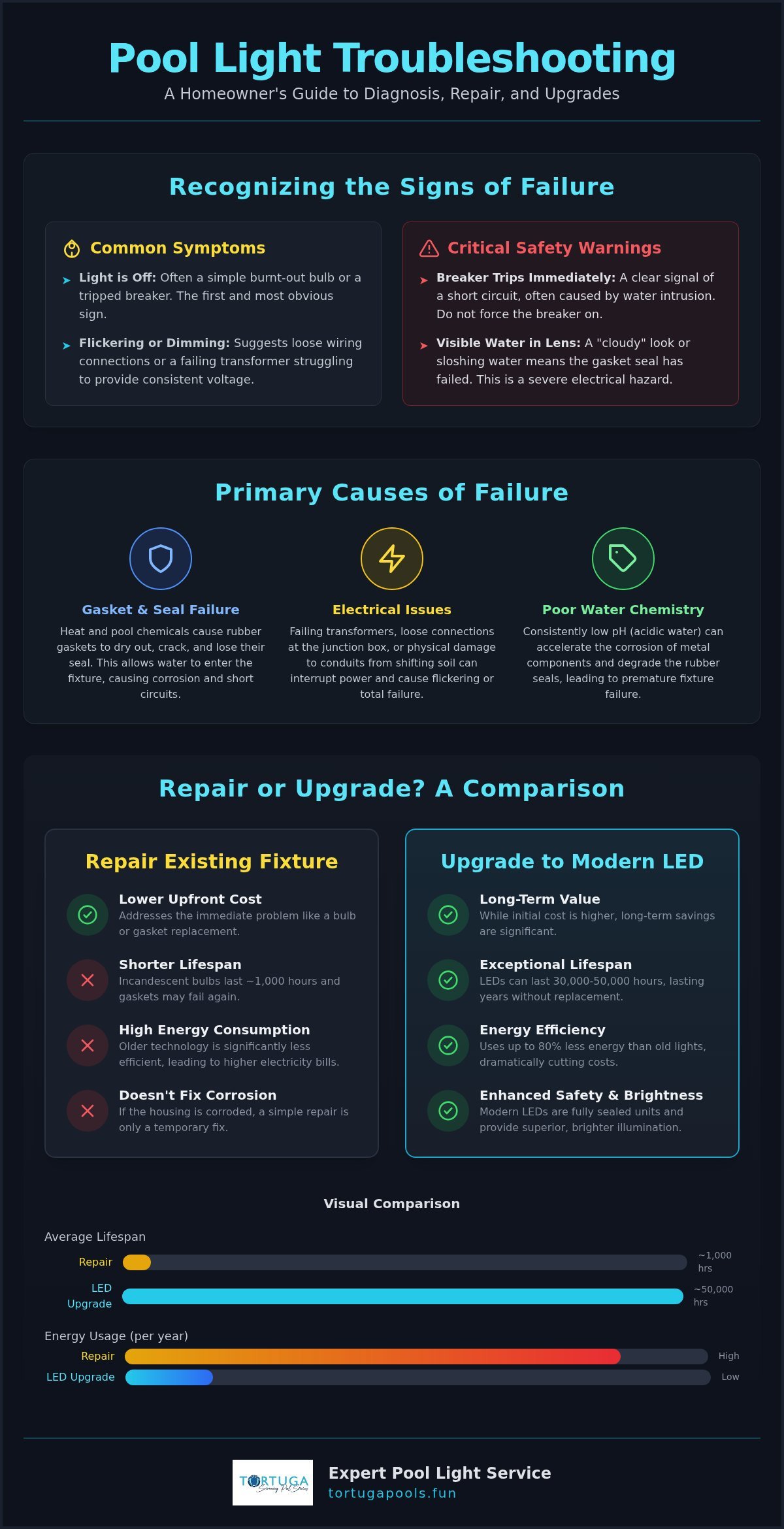
Identifying a malfunction in your pool lighting requires a disciplined eye. While a dark pool is often just the result of a burnt-out bulb, it can also indicate a more complex failure within the electrical circuit. A professional pool light repair service begins by isolating the cause through systematic testing. If the light fails to turn on but the breaker remains set, the issue is likely the bulb or the internal socket. However, if the breaker trips immediately upon activation, the problem is almost certainly a short circuit or water intrusion. Professional diagnosis prevents the frustration of replacing a bulb only to have it fail again within days.
Visible Water and Gasket Failure
Texas summers are relentless. The intense heat in Katy and Fulshear causes rubber gaskets to dry, crack, and lose their elasticity over time. Once this seal fails, hydrostatic pressure forces pool water into the light housing. You might see a “cloudy lens” or actual water droplets sloshing behind the glass. This is a critical warning sign. Water ingress doesn’t just ruin the bulb; it leads to permanent corrosion of the internal light socket and can compromise the integrity of the wiring cord. Ignoring a leaky gasket eventually turns a simple maintenance task into a full fixture replacement. We prioritize the integrity of these seals because a dry housing is the only way to ensure long-term stability.
Electrical Warnings: Tripping Breakers and Dimming
The safety of your family depends on a functional Ground-Fault Circuit Interrupter (GFCI). This device is a requirement under the National Electrical Code (NEC), designed to shut off power instantly if it detects a current leak. If your pool light trips the GFCI, don’t attempt to force the breaker back on. A tripping breaker is a diagnostic signal that electricity is finding an unintended path, often through water or a compromised wire. When you engage a professional pool light repair service, the technician will use specialized meters to verify where the fault lies before any parts are replaced.
Flickering or dimming lights present a different set of challenges. This behavior often points to loose connections at the junction box or a failing transformer. In older systems, transformers can struggle to provide consistent voltage, leading to premature bulb failure. A methodical inspection of these components ensures that the repair addresses the root cause rather than just treating the symptom. Consistency in your lighting system is a matter of both aesthetics and fundamental safety.
Why Pool Lights Fail: The Science of Underwater Seals
A pool light is an engineering marvel that must remain perfectly dry while submerged under thousands of gallons of water. The anatomy of the system includes the niche, which is the recessed bucket in the pool wall, the fixture housing, the power cord, and the lens gasket. Hydrostatic pressure is the primary antagonist in this environment. This pressure constantly searches for a weakness in the seals. When a pool light repair service is performed, the technician must account for the fact that water pressure at the pool floor is relentless. Poor water chemistry also plays a significant role. If your pH levels are consistently low, the acidic water can eat away at the metal components and degrade the rubber seals that keep the fixture watertight. Homeowners who want to move away from the chemical roller coaster of manual chlorine additions often consider a salt water chlorinator installation, which can help maintain more stable water chemistry and reduce the corrosive effects on pool equipment including light fixtures.
The Critical Role of the Lens Gasket
The lens gasket is a single-use component. Every time a fixture is opened for a bulb replacement or inspection, the old gasket must be discarded. Reusing a compressed gasket is a recipe for failure because the material has already taken a set and cannot reform a perfect seal under pressure. In the Houston area’s high humidity, we often prefer silicone gaskets over standard rubber because they resist dry rot more effectively. Tightening the pilot screw requires a steady hand approach. Overtightening can crack the lens or warp the housing, while undertightening allows moisture to seep in. Precision is the only way to ensure the repair lasts for years.
Conduit and Junction Box Integrity
The shifting clay soil in Katy and Fulshear presents a unique challenge for pool electrical systems. As the ground expands and contracts with the Texas weather, it puts physical stress on the PVC conduits housing your light cords. This movement can snap conduits or pull them away from the light niche. A properly installed system relies on a high-loop configuration, where the conduit rises above the water level before reaching the junction box. This prevents water from traveling up the pipe through siphoning. When a homeowner suspects a leak, professional emergency pool leak repair Katy experts often begin at the light niche, as it is a common failure point for both water loss and electrical shorts.
All installations must adhere to the safety standards found in NFPA 70, National Electrical Code to ensure the system is grounded and bonded correctly. If you are concerned about the stability of your lighting, a methodical inspection can identify these hidden structural issues before they cause a total system failure. For residents needing a reliable assessment, visiting tortugapools.fun is a good first step toward a stable, long-term solution.
Repairing vs. Replacing: A Homeowner’s Comparison Guide
Deciding between a minor repair and a full fixture replacement requires a disciplined look at the internal condition of your lighting equipment. If the stainless steel housing is intact and the socket shows no signs of pitting or green copper corrosion, a professional pool light repair service often recommends a simple bulb and gasket swap. This is a conservative, effective path for fixtures that have been well-maintained. However, once the metal housing begins to degrade or the cord jacket shows signs of cracking, the system has reached a point of no return. A methodical assessment identifies whether the unit can still hold a vacuum-tight seal or if it has become a liability.
Bulb Replacement: The Short-Term Fix
Traditional incandescent and halogen bulbs are tactical solutions for immediate lighting needs. They are functional, but they operate at very high temperatures. This heat production causes the surrounding rubber gasket to expand and contract aggressively, which eventually leads to the dry rot issues common in Katy’s humid environment. While replacing the bulb is a lower initial commitment, it’s important to remember that these bulbs have a relatively short lifespan, typically ranging from 1,000 to 5,000 hours. This approach is a temporary resolution that doesn’t address the underlying inefficiency of older technology.
LED Upgrades: Efficiency and Color
Transitioning to LED technology is a move toward long-term stability and equipment longevity. Modern LED units draw significantly less power than their predecessors. A standard incandescent bulb often draws 500W, whereas a comparable LED unit might only draw 30W to 50W. This massive reduction in energy draw results in much lower operating temperatures, which helps preserve the integrity of the lens gasket over time. The lifespan of a quality LED unit is also vastly superior, often rated for 20,000 to 30,000 hours of use.
- Reduced heat production preserves the life of underwater seals.
- Dynamic color-changing features allow for customizable backyard atmospheres.
- Seamless integration with modern pool automation systems for smartphone control.
Compatibility is the final piece of the puzzle. Not every modern fixture is a direct fit for older pool niches. A professional service verifies the manufacturer specifications of your existing niche before any installation begins. This precision prevents the need for invasive structural modifications to your pool wall. By choosing a replacement that respects the existing infrastructure, you ensure a secure, bright environment for night swimming without the need for constant troubleshooting.
What to Look for in a Katy Pool Light Repair Service
Selecting a pool light repair service is a decision that directly impacts the safety and stability of your home. Many homeowners assume a general residential electrician is the best choice for lighting issues. However, pool lighting is a specialized field that combines electrical theory with hydraulic mechanics. A general electrician may understand the wiring but often lacks experience with the physical stresses of a submerged environment. They might miss the nuances of how a niche must be bonded to the pool’s structural steel to prevent dangerous voltage gradients. Professional pool technicians bring a disciplined understanding of how water and electricity must be kept strictly separate.
Pool-Specific Electrical Expertise
A qualified technician views your pool equipment as an integrated ecosystem. This means they understand how pool pump motor repair and underwater lighting rely on the same grounding and bonding standards. When you interview a service, ask specifically about their diagnostic tools. Do they use a megohmmeter to test cord insulation? How do they verify the integrity of the underwater seal before they leave? A professional should be able to explain their verification process without hesitation. They should also carry specific liability insurance that covers work on swimming pool equipment, which is distinct from standard residential electrical coverage.
Local Accountability and Neighborly Service
Local experience in Katy and Fulshear isn’t just about convenience; it’s about understanding the specific environmental challenges of the region. Our shifting clay soil can wreak havoc on underground conduits, and a service provider who works in this area daily knows exactly where these failures tend to occur. Choosing a family-owned business often ensures a higher level of neighborly accountability. You aren’t just a ticket number on a schedule; you’re a neighbor who deserves a safe backyard sanctuary. This local pride drives a commitment to high standards that national chains often lack.
We believe in a “steady hand” approach to every project. This means we don’t rush through a repair just to get to the next appointment. A rushed gasket replacement is a leaky gasket waiting to happen. Longevity is built through patience and a disciplined, step-by-step methodology. Every screw is tightened with intentionality. Every seal is tested with precision. This methodical craftsman mindset is what separates a temporary fix from a permanent solution that protects your family for the long term.
If you’re ready for a thorough, professional assessment of your lighting system, you can schedule a pool light repair service with a team that treats your property with the same diligence and respect as their own.
The Tortuga Pools Method: Reliable Lighting Repairs
At Tortuga Pools, we don’t believe in quick fixes that leave your family’s safety to chance. Our pool light repair service is built on a foundation of professional reassurance and technical discipline. We treat every pool in Katy and Fulshear with the same meticulous care we would give our own property. This means we prioritize the long-term stability of your electrical system over superficial repairs. By focusing on the root cause of a failure, we ensure your pool remains a bright, secure environment for years to come. Our approach is grounded in the belief that a job done correctly the first time is the only job worth doing.
Precision Diagnosis and Safety Testing
Our process is deliberate and methodical. We begin by carefully pulling the light fixture out of the niche and onto the pool deck. This allows for a thorough inspection of the cord jacket and housing without the distortion of water. We don’t just look for a burnt bulb; we perform a rigorous verification of the GFCI and bonding wire integrity. These are the invisible safeguards that protect swimmers from electrical faults. When it’s time to reassemble the unit, we use only high-quality gaskets and seals that are specifically rated for the Texas climate. Every pilot screw is seated with craftsman-level precision. This ensures a vacuum-tight seal that stands up to the relentless hydrostatic pressure of your pool.
Consistency is key to equipment longevity. We often integrate these detailed lighting inspections into our weekly pool maintenance programs for Katy homeowners. During routine visits, our technicians keep a steady hand on your system’s health. We look for early signs of moisture ingress or lens clouding before they escalate into major failures. Identifying a failing gasket during a standard cleaning can prevent an expensive fixture replacement later. It is a protective measure that provides peace of mind for your home and family.
Your Partner for a Brighter, Safer Pool
We act as your reliable guide through the technical maintenance of your pool. For many Fulshear families, this means transitioning from outdated, high-heat incandescent bulbs to modern, energy-efficient LED systems. We handle the entire conversion process with a disciplined methodology. We ensure your new lighting is fully compatible with your existing niche and automation system. You aren’t just hiring a repair crew; you’re partnering with local experts who value quality and patience over speed. We take the time necessary to verify every connection, ensuring your backyard sanctuary remains a source of joy rather than frustration.
The first step toward a more reliable pool is a professional diagnostic visit. We don’t rush the diagnostic process because accuracy requires time and focus. If you have noticed water in your lens or a breaker that won’t stay set, it’s time for a methodical equipment inspection. Let us help you keep your pool safe and bright with a service you can depend on for the long haul.
Securing Your Backyard Sanctuary
Maintaining a safe and bright pool environment requires more than just a quick fix. It demands a disciplined approach to every seal and circuit. You now understand that moisture in a lens is a critical warning sign and that shifting Texas soil can impact your electrical conduits. Choosing a professional pool light repair service ensures these technical nuances are addressed with precision rather than guesswork. Whether you are replacing a single gasket or upgrading to an energy-efficient LED system, the goal is always long-term stability and family safety.
As a family-owned Katy business, Tortuga Pools operates as methodical equipment repair specialists who understand our local climate challenges. We treat your property with the same diligence as our own, providing the steady hand required for complex underwater electrical work. We don’t take shortcuts because your peace of mind is our highest priority. Schedule your professional pool light diagnosis with Tortuga Pools today. Let’s bring the light back to your evening swims with a solution built to last.
Frequently Asked Questions
Is it safe to swim if my pool light is out or flickering?
Swimming with a flickering light is not recommended until the cause is identified. While a functional GFCI breaker provides a layer of protection, a flicker often signals a loose connection or moisture intrusion. These issues can escalate into more significant electrical faults. It’s best to leave the light switched off at the breaker and schedule a professional inspection to ensure the grounding and bonding systems are fully intact for your family’s safety.
Can I change my pool light bulb myself without draining the pool?
You don’t need to drain your pool to change the bulb. Most fixtures are installed with several feet of extra cord coiled inside the niche. This allows a technician to remove the single pilot screw and lift the entire housing onto the pool deck for service. This methodical approach keeps the electrical components dry during the bulb and gasket swap, ensuring the internal socket remains free from corrosion throughout the process.
How much does a typical pool light repair cost in the Katy area?
The cost of a repair depends entirely on whether the issue is a simple gasket failure or a total fixture replacement. While minor component swaps are relatively straightforward, replacing an entire unit involves technical labor and high-quality materials. We recommend a professional diagnosis to provide an accurate assessment of your system’s needs. This ensures you aren’t paying for unnecessary parts while guaranteeing the long-term stability of your backyard lighting.
Why does my pool light keep burning out every few months?
Frequent bulb failure is usually a sign of a compromised seal or a failing transformer. If water vapor enters the housing, it creates a humid environment that causes bulbs to pop under the stress of heat. Additionally, older halogen bulbs generate intense heat that can bake the gasket, leading to a cycle of moisture and failure. Engaging a professional pool light repair service can identify if a voltage spike or seal issue is the true culprit.
What is the difference between 12V and 120V pool lighting?
The primary difference is the operating voltage and the equipment required to run them. A 120V system runs on standard household current, while a 12V system uses a transformer to step that power down. Many modern installations in Katy and Fulshear favor 12V systems for an added margin of safety. Regardless of the voltage, both systems must adhere to strict grounding and bonding requirements to operate safely in a submerged environment.
Do LED pool lights require different wiring than my old incandescent bulb?
Most LED pool lights are designed to fit into existing niches and use the same cord path as older incandescent models. However, if you’re switching from a 120V incandescent to a 12V LED, you’ll need to install a compatible transformer. This is a common upgrade during a pool light repair service because LEDs offer superior longevity and color options while operating at much cooler temperatures than traditional bulbs.
How do I know if my pool light niche is leaking water into the ground?
A leak in the light niche often manifests as a consistent drop in the pool’s water level. You can verify this by performing a dye test around the point where the light cord enters the conduit. If the dye is sucked into the pipe, the seal has failed. Because our local soil shifts frequently, these conduits can crack or pull away, requiring a methodical repair to stop the water loss and protect your pool’s structural integrity. If the water loss is significant or sudden, you may need to contact emergency pool leak repair Katy professionals to stabilize the situation before it causes further damage to your property.
What should I do if my pool light trips the GFCI breaker immediately?
If your breaker trips immediately, you must stop attempting to reset it. This behavior indicates a direct ground fault where electricity is escaping the intended circuit. It’s often caused by water inside the fixture or a pinched wire in the conduit. Forcing the breaker to stay on can lead to dangerous conditions. You should leave the power off and contact an expert to perform a systematic electrical diagnostic of the entire lighting circuit.